
Swiss Rösti Recipe (Crispy Golden Potato Cake)

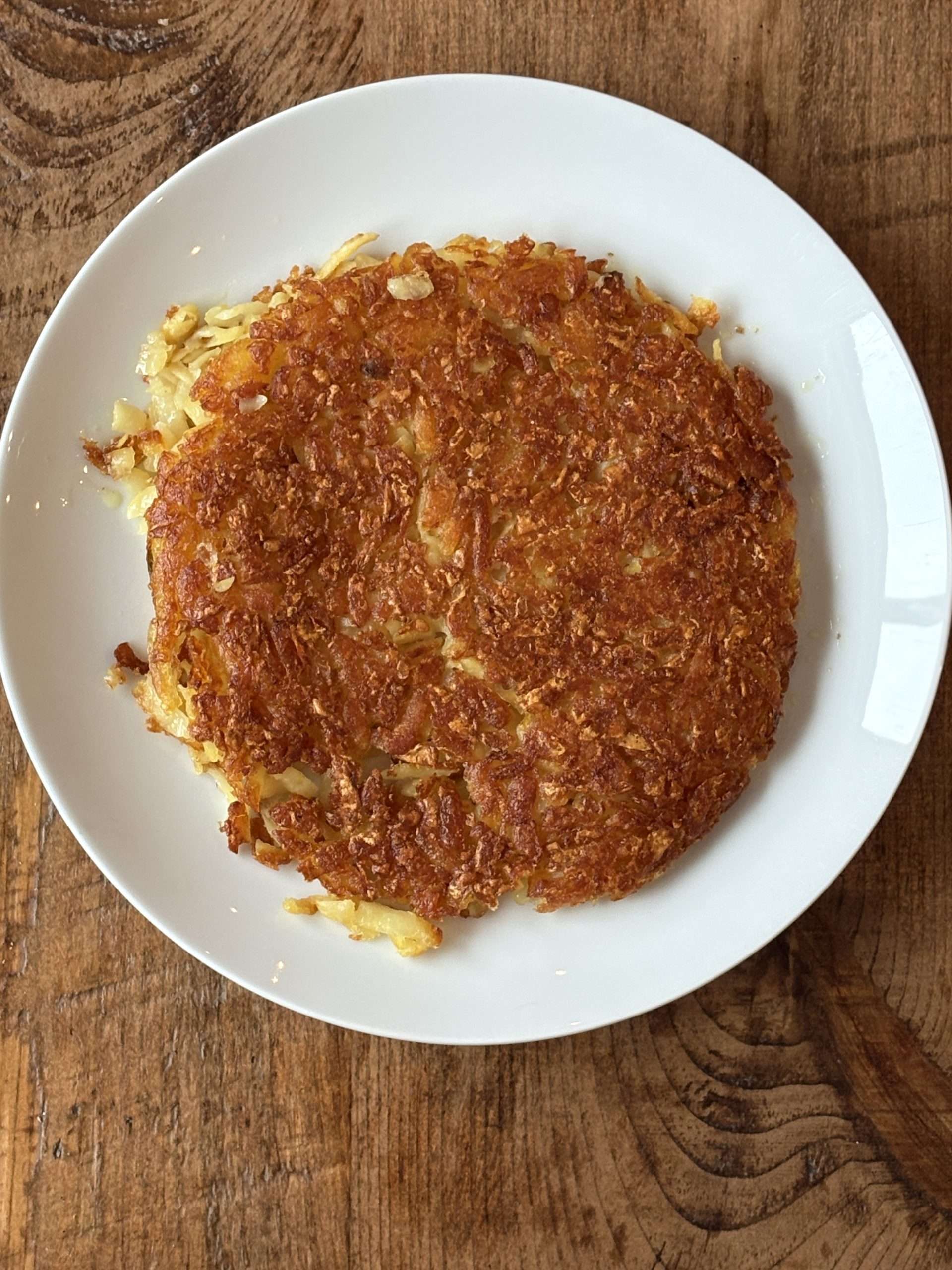
If you didn’t grow up eating rösti, think of it as the Swiss version of one very large, very golden hash brown. It’s made with just potatoes, butter and salt, then cooked in a skillet until crisp on the outside and tender in the middle. No eggs, no flour, and nothing fussy – although flipping the whole thing does require a small moment of courage.
Rösti was on regular rotation in our house growing up – probably because it goes with just about anything. We ate it alongside meat and vegetables, topped it with an egg, or simply served it straight from the pan while the edges were still nice and crisp.
Some links in this post are affiliate links, which means I may earn a small commission at no extra cost to you. Thank you for supporting Poetic Road!
Swiss Rösti At-a-Glance
The potatoes: Yellow or all-purpose potatoes, such as Yukon Gold, work best. Avoid very waxy salad potatoes, which may not hold together as well.
The traditional method: Partially boil the potatoes in their skins, then chill them overnight before grating.
What holds it together: Nothing extra – just the natural starch in the potatoes. No eggs or flour required.
Plan ahead: The potatoes are best cooked the day before, but most of that time is simply spent waiting in the fridge.
Looking for something specific?
What is Swiss Rösti?
Rösti is a traditional Swiss dish made from coarsely grated potatoes cooked in a skillet until they form one large, golden potato cake. It began as a hearty breakfast for farmers in the canton of Bern, but these days you’ll find it served all across Switzerland at just about any time of day.
Potato Rösti can be served as a side dish, but it’s filling enough to become a meal of its own with a fried egg, a little cheese or a simple green salad. It’s also the classic partner for Zürcher Geschnetzeltes, where the crisp potatoes are very good at catching all that creamy mushroom sauce.

Ingredients You’ll Need
The complete list of ingredients and measurements can be found in the recipe card below.
Potatoes
Yellow or all-purpose potatoes, such as Yukon Gold, work well because they hold their shape after being partially boiled but still contain enough starch to help the rösti stick together.
Very starchy potatoes such as russets tend to become dry and crumbly when used with this method. Very waxy salad potatoes can have the opposite problem and may not bind as easily.
The potatoes should feel firm after boiling. You aren’t cooking them all the way through just yet – the skillet will take care of that tomorrow.
Butter
Butter gives rösti its familiar rich flavour and helps the surface turn beautifully golden. Clarified butter is also a good choice because it can handle the longer cooking time without browning as quickly.
You can use a combination of butter and a little neutral oil if you prefer, but I wouldn’t skip the butter entirely. We’re only working with three main ingredients here, so each one has a job to do.
Salt
Season the grated potatoes before they go into the skillet. Potatoes can take a fair amount of salt, but you can always begin conservatively and add more at the table.
Black pepper is optional. I usually keep the base simple, especially if I’m serving the rösti with something flavourful on top.
Why Cook the Potatoes the Day Before?
Partially cooking the potatoes and chilling them overnight firms them up, making them much easier to peel and grate without turning them into mush. The grated strands also hold their shape better in the skillet and naturally come together as they cook.
In Switzerland, potatoes cooked in their skins are called Gschwellti. They’re used for all sorts of things, including rösti, and are often prepared ahead of time.
Let the potatoes cool completely before placing them in the refrigerator. I leave them uncovered so the surface can dry slightly overnight.


FROM MY SWISS KITCHEN
A Little Taste of Switzerland, Every Week.
Swiss favourites, seasonal baking, and recipes worth making again. Join me for weekly cooking inspiration, delivered straight to your inbox.
Free recipes every week. Unsubscribe anytime.
Is Rösti the Same as Hash Browns?
They’re close relatives, but they aren’t quite the same thing.
North American hash browns are usually made with raw shredded potatoes and cooked as a loose layer or in smaller portions. Swiss rösti is typically thicker and cooked as one large, cohesive potato cake before being sliced into wedges.
Equipment You’ll Need
- Large pot
- Box grater
- 9- or 10-inch non-stick or well-seasoned cast-iron skillet
- Spatula
- Large flat plate
How to Make Swiss Rösti

1. Partially Boil the Potatoes (Day 1)
Place the whole, unpeeled potatoes in a large pot and cover them with cold, lightly salted water.
Bring the water to a boil, then cook the potatoes for approximately 10–15 minutes, depending on their size. A small knife should pierce the outside fairly easily but still meet resistance in the centre.
Be careful not to cook them until completely tender. Overcooked potatoes will be difficult to grate and can leave you with something closer to mashed potatoes than rösti.
Drain the potatoes and let them cool completely. Refrigerate them overnight, uncovered.

2. Peel and Grate
The following day, peel the chilled potatoes. The skins should scrape away quite easily with a small paring knife or your fingers.
Grate the potatoes using the largest holes of a box grater. You want long, visible strands rather than finely shredded potato.
Season with salt and gently toss everything together. Try not to overmix or crush the potato strands.
3. Add the Potatoes to the Skillet
Melt half of the butter in a 9- or 10-inch non-stick skillet over medium heat.
Add the grated potatoes and spread them loosely across the pan. Let them cook for a minute or two before shaping them. This allows the butter to coat the bottom strands and gets the browning underway.

4. Shape and Cook the Rösti
Use a spatula to gently gather the potatoes into a neat, round cake. Lightly press the top, but don’t pack it down too firmly. A little space between the strands helps the inside stay tender.
Reduce the heat to medium-low and cook without stirring for 10–12 minutes.
You should hear a gentle sizzle. If the pan is completely silent, increase the heat slightly. If the butter is beginning to burn, turn it down.
You’ll know when the rösti is ready to flip when the bottom is deeply golden and the whole cake moves when you gently shake the pan. I generally tell people, when you start to think it might be ready, wait a few more minutes and then move on to the next step of flipping it.
5. Flip the Rösti
Place a large, flat plate over the skillet. Holding the plate firmly against the pan, carefully turn the skillet and plate over together so the rösti lands on the plate, cooked side up. Set the skillet back on the burner, then slide the rösti from the plate into the pan with the uncooked side down. This is definitely the hardest part, so, take a breath before the flip and commit – hesitating halfway through won’t work in your favor, I’ve made that mistake many times.
Add the remaining butter around the edges and cook for another 8–10 minutes, until the second side is golden and the potatoes are cooked through.
Slide the finished rösti onto a serving plate and serve while it’s still hot and crisp.
Troubleshooting Common Rösti Problems
Rösti is simple, but it can be a little particular. If yours isn’t behaving, one of these is usually the reason.
Why Is My Rösti Falling Apart?
This is the number one question I get asked, and the one I myself had to overcome. The issue? It comes down to patience. Unstable rösti is usually a sign that the first side may not have cooked long enough. Rösti needs time to form a proper golden crust before you attempt to flip it, so my advice is to be extra patient.
Make sure the whole cake moves freely when you shake the skillet. If part of it still seems attached to the pan, give it another minute or two.
And if it does break during the flip, don’t panic. Push the potatoes back into shape with your spatula and carry on. It may not be perfectly round, but it will still taste like rösti.
Why Is My Rösti Mushy?
The potatoes were probably cooked too long before chilling, grated while still warm or packed too firmly into the skillet.
They should be only partially cooked on the first day and completely cold before grating.
Why Isn’t My Rösti Crispy?
Too much moisture or heat that is too low can cause the potatoes to steam instead of brown.
Let the potatoes dry uncovered in the refrigerator, make sure the butter is gently sizzling before adding them and resist the urge to keep moving everything around.
Remember, Rösti likes to be left alone.
Why Is My Rösti Sticking to the Pan?
The skillet may not have been hot enough, or there may not have been enough butter covering the surface.
A reliable non-stick skillet or well-seasoned cast-iron pan makes the flip much easier. Also make sure the first side has formed a proper crust before trying to release it.
Why Did My Potatoes Turn Gummy?
The potatoes may have been overcooked or grated too finely. Use the largest holes of your box grater and handle the strands gently when mixing.
Delicious Variations & Serving Ideas
While the purist version relies strictly on potatoes and butter, you can easily customize your skillet:
- Rösti Bernese Style: Scatter crisp, smoky bacon lardons into the pan with the potatoes.
- Rösti Valaisanne: Top the finished hot Rösti with a thick slice of melted Raclette or Gruyère cheese and a fried egg.
- What to serve it with: Pair your crispy potato cake with a classic Zürcher Geschnetzeltes (Swiss Mushroom Veal Ragout), a vibrant beet salad like my Randensalat , or a side of cold applesauce for a comforting weeknight meal.


Classic Swiss Rösti
Equipment
Ingredients
Method
- Place the whole, unpeeled potatoes in a large pot and cover them with cold, lightly salted water. Bring to a boil and cook for 10–15 minutes, depending on their size. A small knife should pierce the outside fairly easily but still meet resistance in the centre.
- Drain the potatoes and allow them to cool completely. Refrigerate them uncovered for at least eight hours, preferably overnight.
- Peel the chilled potatoes and grate them using the largest holes of a box grater. Season with salt and gently toss without crushing the strands.
- Melt half of the butter in a 9- or 10-inch skillet over medium heat. Add the grated potatoes and let them sit loosely in the pan for 1–2 minutes.
- Use a spatula to gather the potatoes into an even, round cake. Press the top lightly, reduce the heat to medium-low and cook undisturbed for 10–12 minutes.
- Once the bottom is deeply golden and the rösti moves freely when you gently shake the pan, place a large, flat plate over the skillet. Holding them firmly together, carefully turn the skillet and plate over so the rösti lands on the plate, cooked side up.
- Set the skillet back on the burner and slide the rösti into it with the uncooked side down.
- Add the remaining butter around the edges. Cook for another 8–10 minutes, until the second side is golden and the potatoes are tender.
- Slide the rösti onto a serving plate, cut it into wedges and serve immediately.
Notes
- Do not fully cook the potatoes before chilling. They should remain firm in the centre.
- Use the largest holes of a box grater to create long, visible strands.
- Let the first side form a deep golden crust before attempting to flip.
- For extra-crisp edges, add another teaspoon or two of butter around the sides during cooking.
- Smaller individual rösti will cook and brown more quickly than one large cake.
Disclaimer: I am not a certified nutritionist. Nutrition facts are calculated using an automated database of common ingredients and are intended as an estimate only. Variations can occur depending on product brands, measuring methods, and ingredient swaps.
Did you make this recipe?
I'd love to know how it turned out!Storage & Make-Ahead
- Rösti is at its best straight from the skillet while the outside is still crisp.
- Store leftovers in an airtight container in the refrigerator for up to three days. Reheat them in a lightly buttered skillet over medium heat until hot and crisp again.
- You can also partially cook the rösti in advance. Cook the first side, flip it and cook the second side for only a few minutes. Let it cool, refrigerate it and finish browning it in the skillet shortly before serving.
- I don’t recommend freezing finished rösti. It can be done, but the potatoes tend to soften and lose the texture that makes the dish so good in the first place.
Frequently Asked Questions
Why is it called rösti?
The word rösti comes from the Swiss German verb “rösten,” meaning to fry or roast. The dish originated in the canton of Bern, where farmers traditionally ate it as a hearty breakfast made from leftover boiled potatoes fried in butter until crisp and golden.
Can I make Rösti with raw potatoes?
Yes, you can use raw potatoes for Rösti, but the texture will be slightly different. Raw potatoes release more starch, making the rösti stick together more, but they may take longer to cook through.
What type of potatoes work best for rösti?
Waxy potatoes (like Yukon Gold) hold their shape well and result in a crispy texture.
How do I flip the rösti?
Use a plate slightly larger than your pan. Place it over the rösti, then flip the pan and plate together. Alternatively, divide the rösti into smaller portions for easier handling.
Is Swiss rösti the same as German Kartoffelpuffer?
No, they’re similar but not the same. Swiss rösti is traditionally made with coarsely grated potatoes that have been boiled in their skins, chilled, then pan-fried into one large golden cake – usually without egg or flour. German Kartoffelpuffer, on the other hand, are often made with raw grated potatoes mixed with egg and sometimes flour, then fried in smaller individual pancakes.
What is the Röstigraben?
The term Röstigraben translates rather dramatically to “rösti ditch.” It refers to the cultural and linguistic divide between French-speaking and German-speaking Switzerland, where rösti has its roots. Thankfully, the dish itself has made it safely across the divide and is now eaten throughout the country.
This Classic Swiss Rösti is one of those timeless recipes that always delivers – golden, crispy, simple, and endlessly satisfying. Whether it’s brunch with eggs or a cozy Alpine dinner, it brings real Swiss comfort to the table.
If you love Swiss staples like this, make sure to join my newsletter – I share new Swiss-inspired recipes, stories, and seasonal content every week.
NEWSLETTER SIGN-UP
A Little Taste of Switzerland in Your Inbox
Traditional Swiss favourites, seasonal recipes, and a few family traditions along the way. Join me every week for a little inspiration from the Swiss kitchen.


