
Maple Brioche with a Maple Sugar Swirl
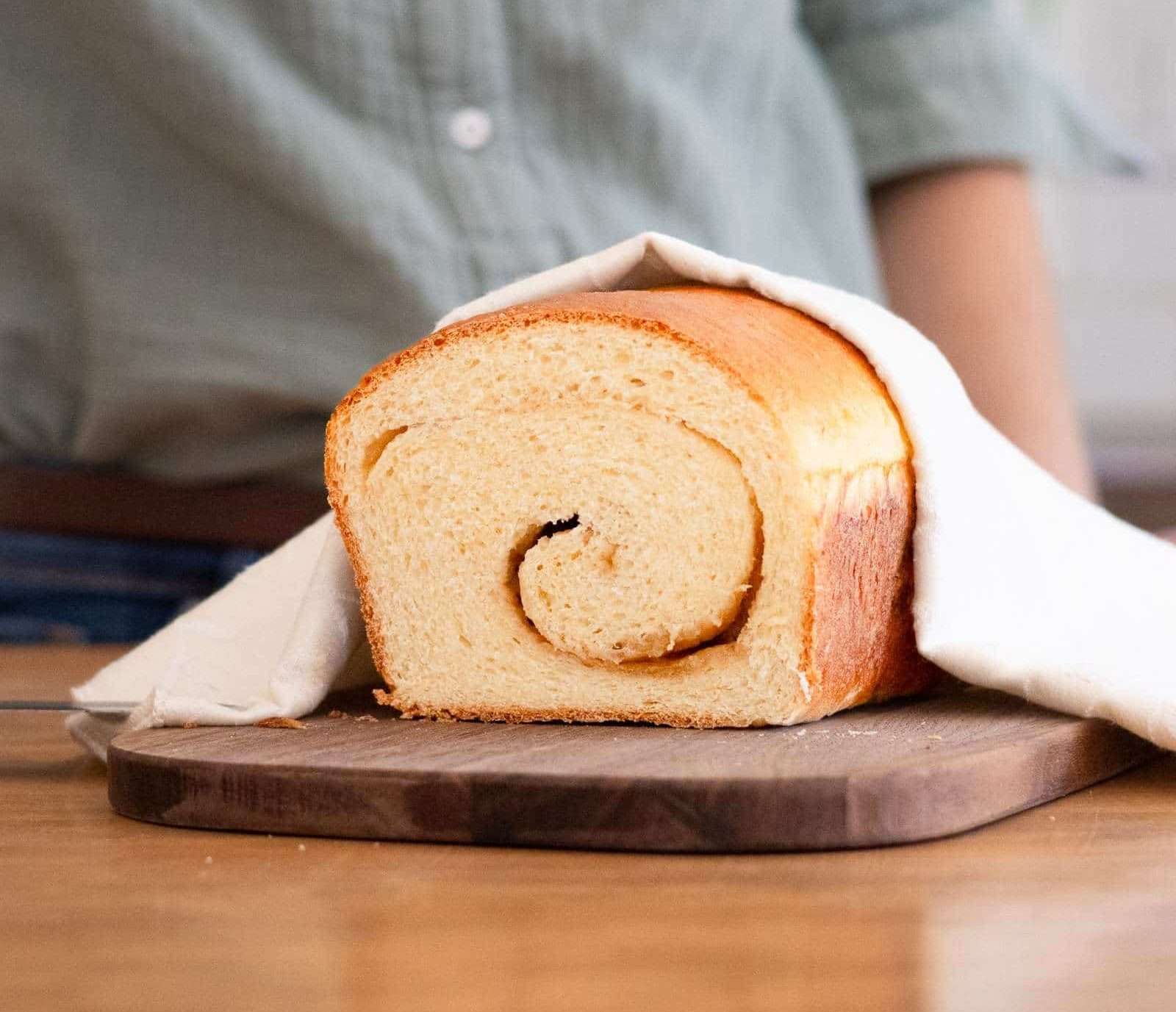
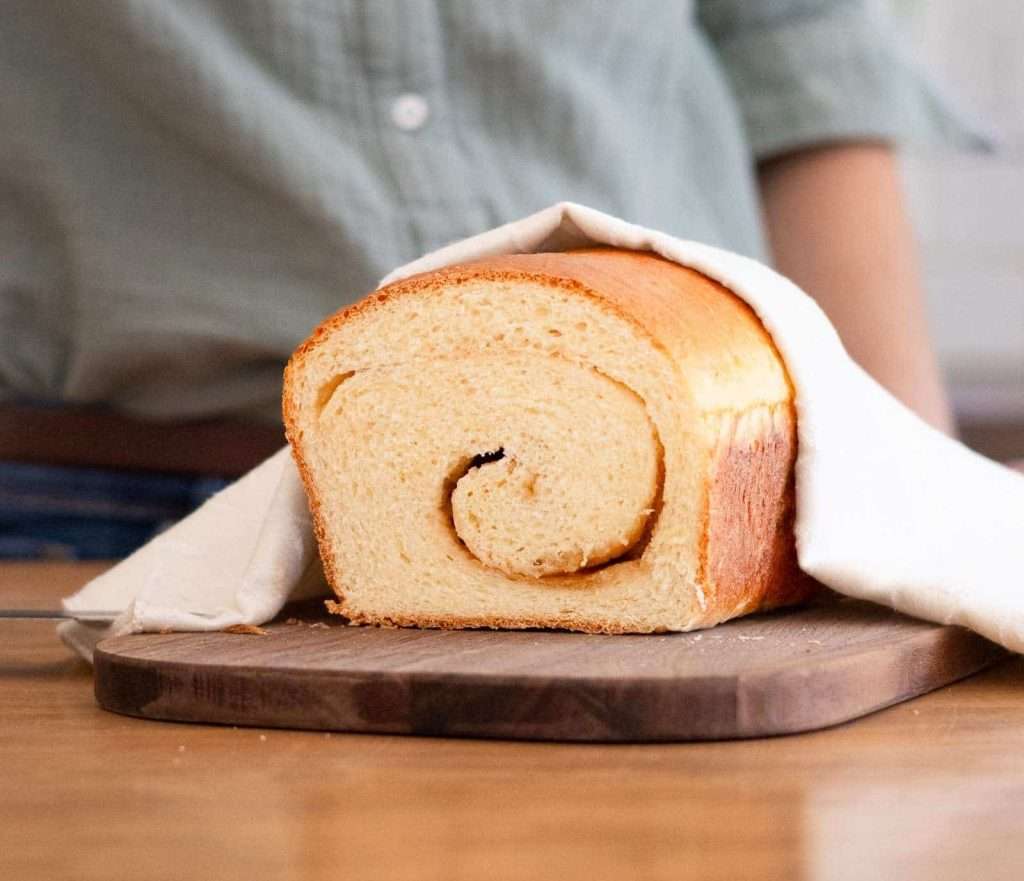
There are mornings when a piece of toast and a cup of coffee are all I want. This is the loaf I’d like that toast to come from. A soft, buttery maple brioche loaf with a maple sugar swirl and a light maple butter finish.
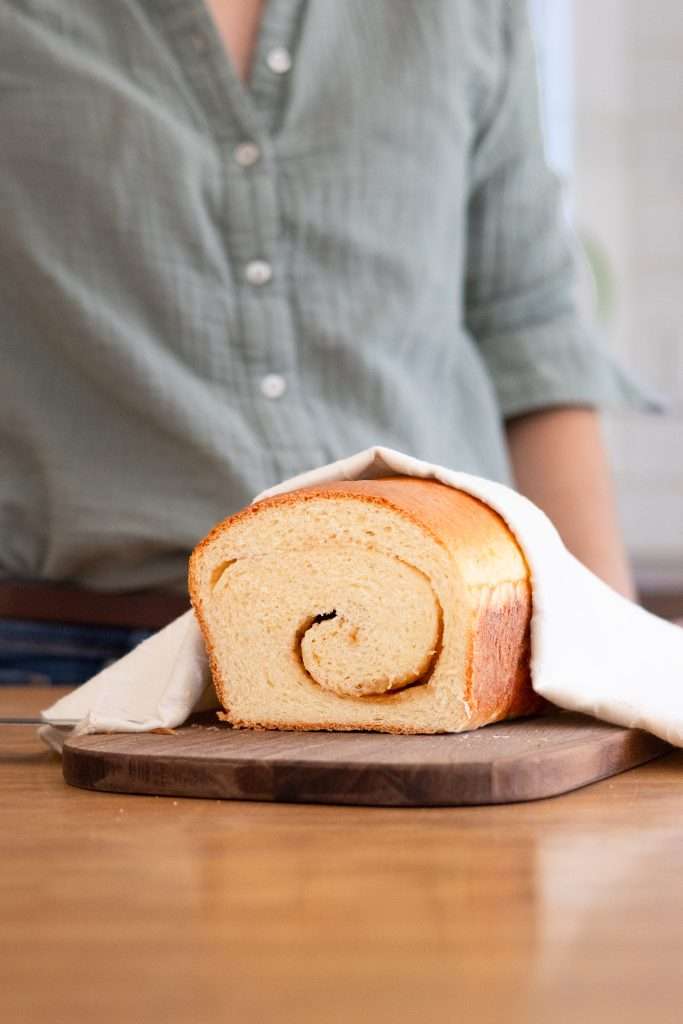
This maple brioche brings together a buttery, egg-rich dough and the flavour of maple in three places: the dough, the swirl and a little brushed over the top after baking. It’s sweet enough to enjoy on its own, but I’d still put a dish of salted butter on the table.
The overnight rest makes this a good weekend baking project. You mix the dough one day, tuck it into the fridge and shape it the next. There’s some waiting involved, but most of that time belongs to the dough.
This post may contain affiliate links. I only share products I truly use and love, and any purchase helps support my work at no extra cost to you.
Looking for something specific?
What you’ll love about this maple brioche
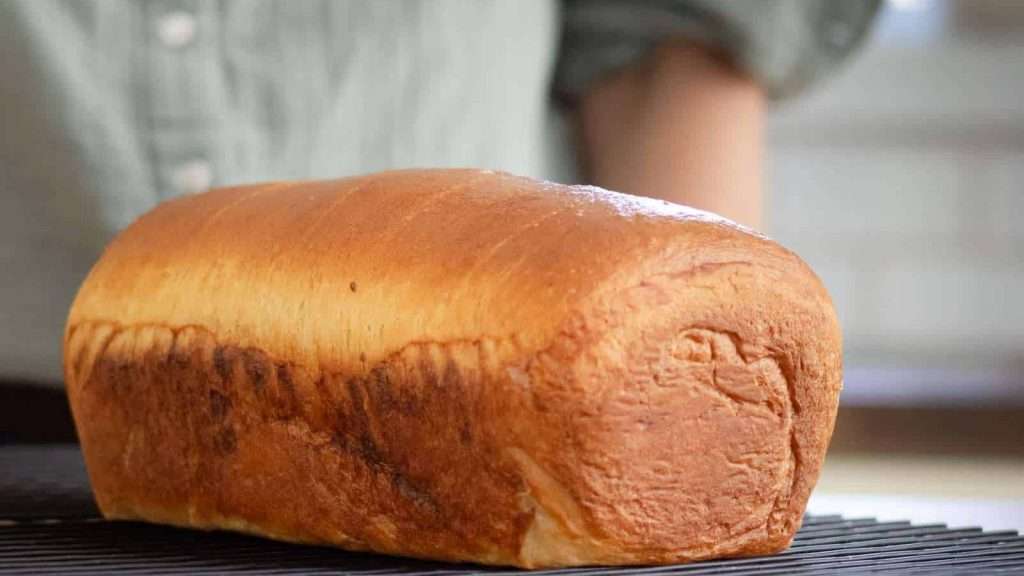
- Maple throughout: Pure maple syrup sweetens the dough, while maple sugar gives the swirl a more concentrated maple flavour.
- A soft, buttery crumb: Eggs and butter give the bread its richness.
- An overnight option: Chilling develops flavour and makes the dough easier to roll.
- Plenty of ways to serve it: Enjoy it sliced, toasted or made into French toast.
A Little Note Before You Start
I’m not going to pretend this is a quick loaf of bread. Brioche likes to take its time, and this one is very much a two-day baking project. Most of that time is spent waiting for the dough to rise or chill, but you’ll still want to set aside a good four to five hours on the second day for shaping, rising, baking, and cooling. In other words, don’t promise anyone maple brioche for breakfast unless you’re planning a very early morning. But when you finally slice into that soft, buttery loaf with its maple sugar swirl, I am sure that you will agree it is completely worth the wait.
What is brioche?
Brioche is an enriched bread made with eggs and butter. Those ingredients give it a softer, richer crumb than a basic loaf of bread.
The dough needs a little more kneading and patience because of that richness. Adding the butter gradually helps it incorporate evenly, and an overnight chill turns a soft, sticky dough into something much easier to shape.
This version includes a maple sugar swirl. It’s a filled brioche loaf, with the filling rolled inside before the final rise.
Ingredients and helpful notes
For the full list of ingredients and their measurements, please refer to the recipe card below.
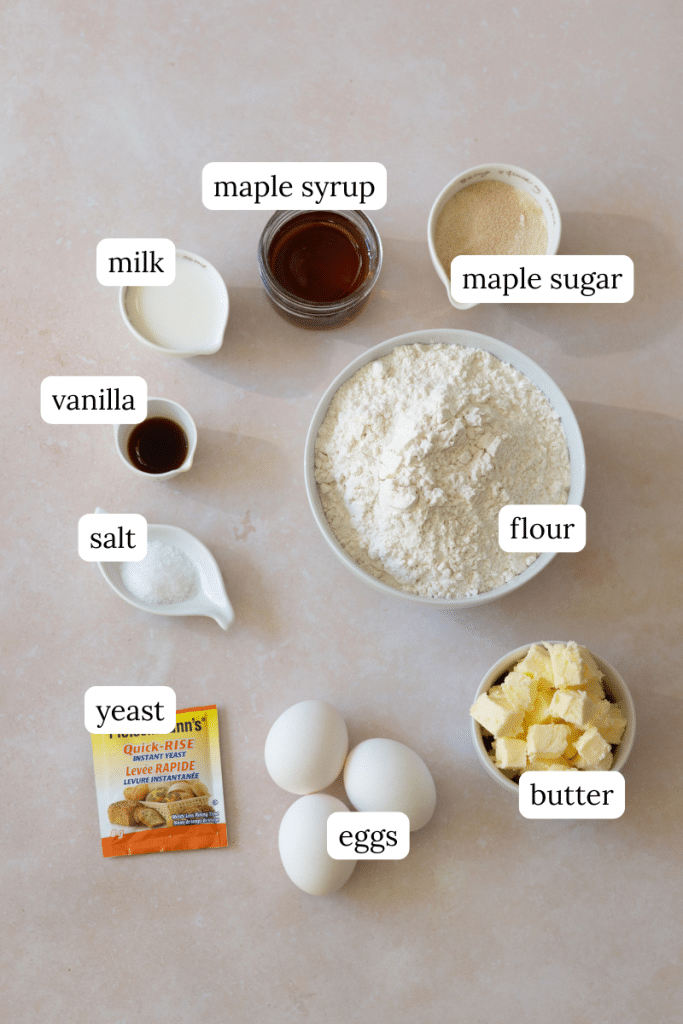
All-purpose flour: Gives this loaf a soft crumb. Weigh it if you can; extra flour can make brioche heavier. If using cups, fluff the flour, spoon it into the measuring cup and level it without packing it down
Instant yeast: Mixes directly into the flour. The rise times are guides, so watch the dough as well as the clock.
Eggs: Add richness, colour and structure. Use large eggs, ideally at room temperature.
Whole milk: Adds moisture. It should be lukewarm, not hot.
Pure maple syrup: Use pure maple syrup rather than maple-flavoured pancake syrup. Dark maple syrup is a good choice when you want a more pronounced flavour.
Unsalted butter: Use butter that is soft enough to press a finger into but still holds its shape. Melted butter will make the dough harder to manage.
Maple sugar: Adds maple flavour to the swirl without the extra liquid of syrup. It’s worth using here, as maple syrup alone gives the dough a fairly gentle maple flavour.
Vanilla and salt: Vanilla complements the maple, while salt balances the sweetness.


FROM MY SWISS KITCHEN
Join me at the kitchen table.
Swiss-inspired recipes, cozy baking, and seasonal stories delivered each week.
Seasonal recipes, Swiss stories, and no spam.
Equipment Needed
- Stand mixer fitted with a dough hook
- 9 × 5-inch loaf pan
- Kitchen scale or measuring cups and spoons
- Mixing bowl
- Rolling pin
- Parchment paper
- Pastry brush
- Cooling rack
How to make maple brioche
1. Mix and knead the dough
Mix the flour, yeast and salt, then add the eggs, milk, maple syrup and vanilla. Knead until the dough begins to develop some elasticity before adding the butter.
Add the softened butter a few pieces at a time. The dough can look slippery or seem to fall apart during this stage. Give each addition time to mix in and keep kneading until the dough becomes smooth and stretchy.
A useful check is to stretch a small piece between your fingers. It should form a thin membrane before tearing. If it tears immediately, knead a little longer and check again.
2. Let it rise, then refrigerate
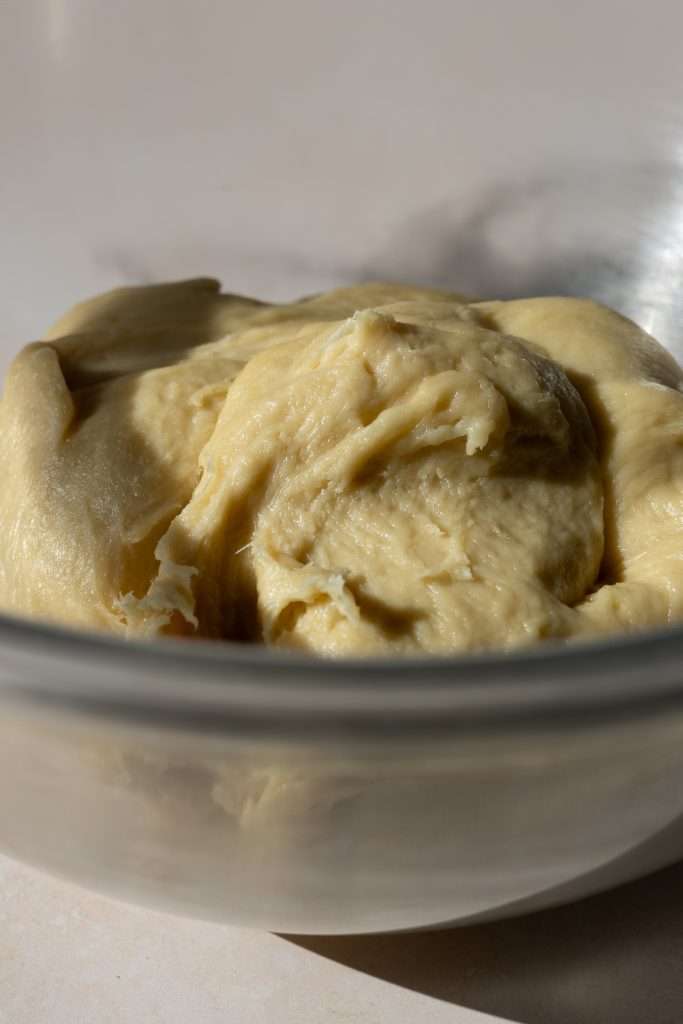
Cover the dough and let it rise until puffy and roughly doubled. Gently press it down, cover tightly and refrigerate overnight.
Don’t worry if the dough feels too soft to roll at this point. The butter will firm up in the fridge, making shaping much easier the next day.
3. Roll and fill
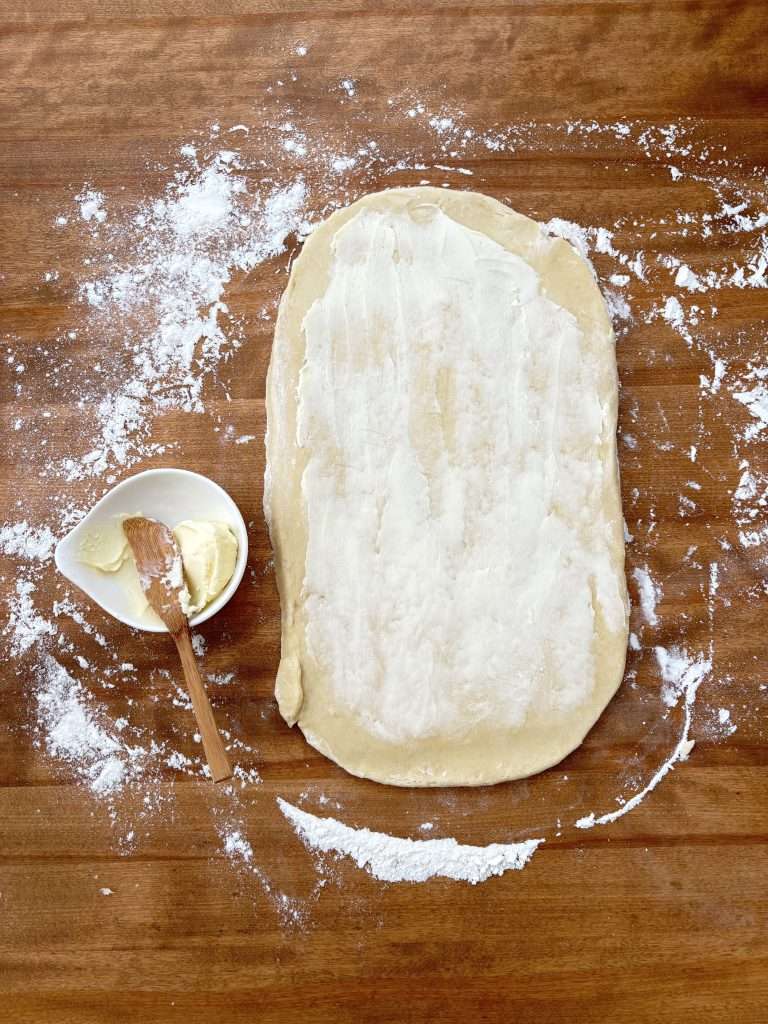
Roll the cold dough into an 8 × 14-inch rectangle. Spread it with the soft butter and sprinkle with maple sugar, leaving a small border around the edges. (Make sure to sprinkle a healthy layer of that maple sugar if you want a distinct swirl)
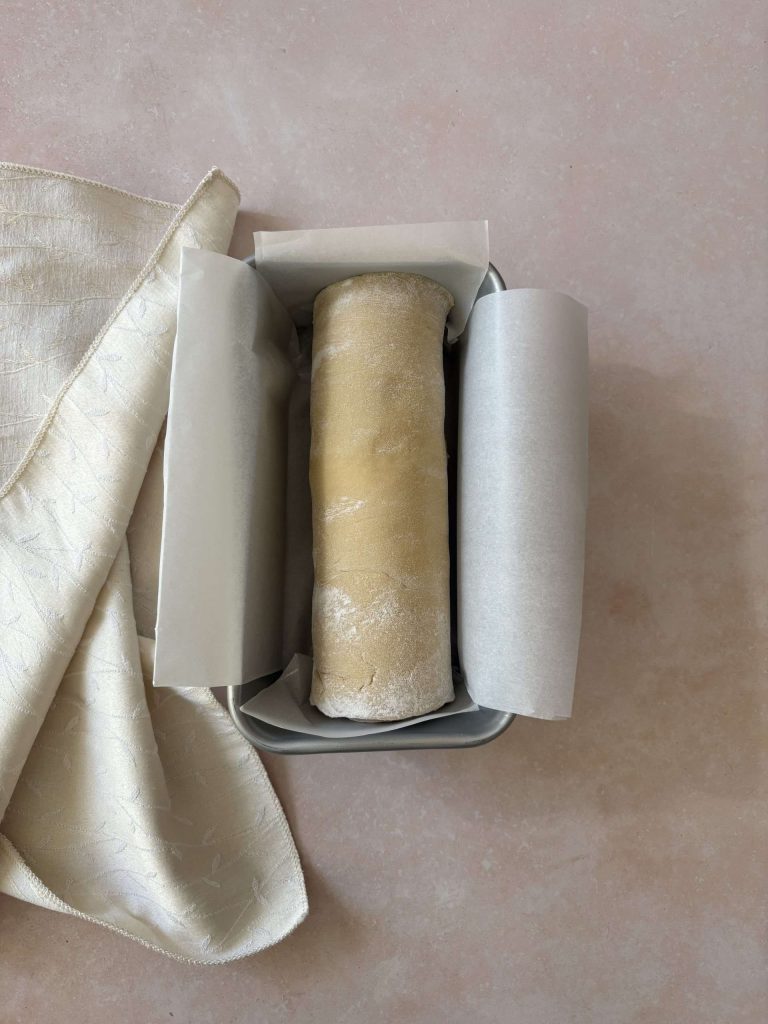
Roll from one of the short ends so the finished log fits the loaf pan. Roll snugly without stretching or pulling the dough, then pinch the seam closed and place it seam-side down in the pan. (Rolling it snugly will prevent too much separation of the swirl once baked)
4. Allow a full second rise
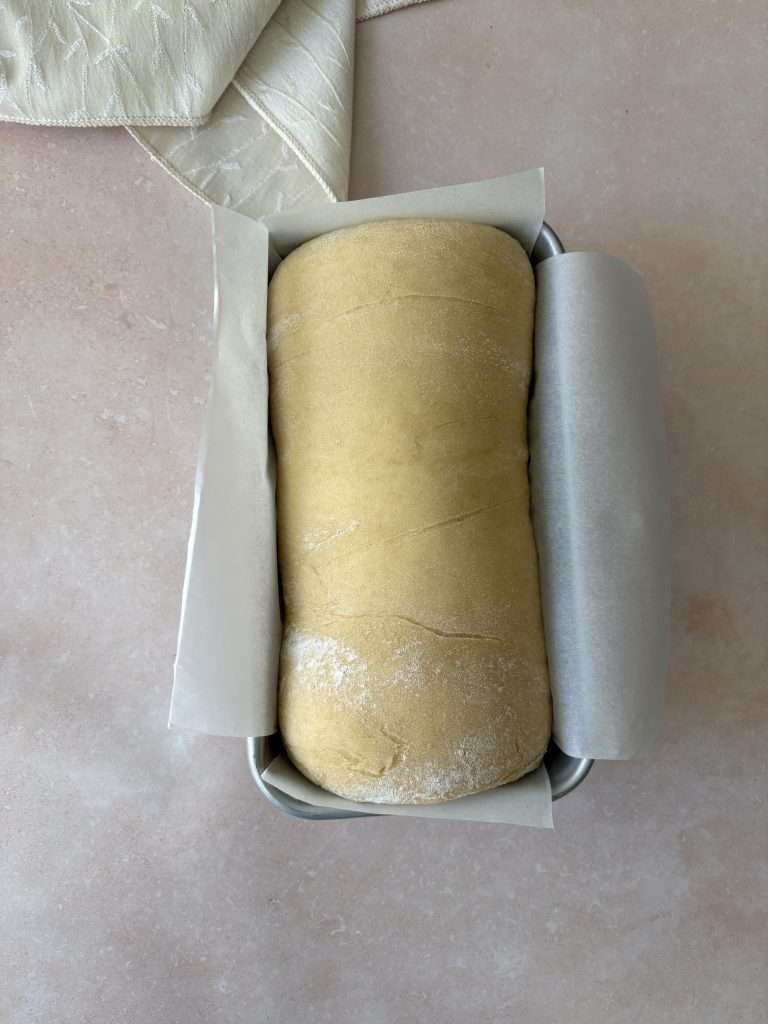
The cold dough needs time to warm up and rise. Wait until the loaf is very puffy and its centre sits about 1 inch above the pan’s rim.
A gentle finger press should leave a slight indentation that slowly springs back. If the dough springs back immediately, it likely needs more time.
5. Bake and brush with maple butter
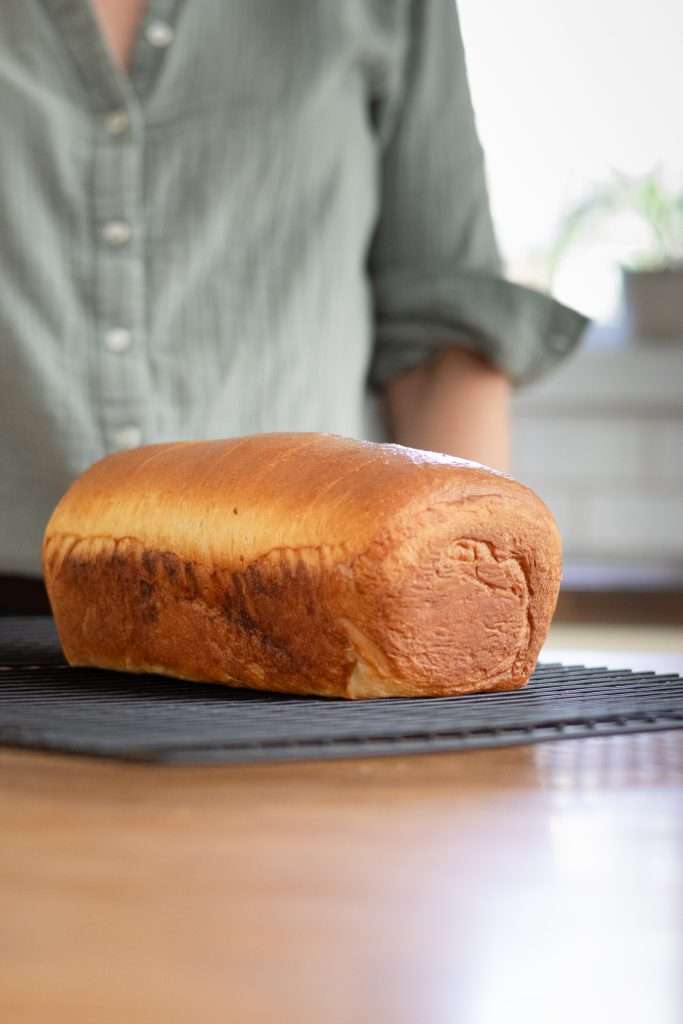
Brush the maple brioche with egg wash and bake until deeply golden and cooked through. Cover loosely with foil if the top colours too quickly.
After a short rest in the pan, transfer the loaf to a rack and brush with maple butter. Let it cool before slicing so the crumb has time to set.
Tips for a soft brioche loaf
Resist adding too much flour. Brioche dough is naturally soft and sticky, especially before chilling. A light dusting for shaping is fine, but repeatedly adding flour during kneading can make the loaf dense.
Keep the butter soft, not melted. If your kitchen is very warm and the dough becomes greasy, pause and chill it briefly before continuing.
Choose a gently warm spot for proofing. Direct heat can melt the butter. A draft-free spot at room temperature works; it simply takes longer in a cool kitchen.
Let the dough tell you when it’s ready. Yeast activity, dough temperature and room temperature all affect rising time.
Check the centre, not just the crust. Egg wash and maple syrup encourage browning. A golden top doesn’t always mean the middle has finished baking.
Maple Brioche with a Maple Sugar Swirl
Equipment
Ingredients
Method
- Mix the dough: Combine the flour, yeast and salt in the bowl of a stand mixer, then add the eggs, milk, maple syrup and vanilla and mix with the dough hook on low speed until a rough dough forms.
- Begin kneading: Increase the speed to medium-low and knead for about 5 minutes, until the dough begins to develop some strength and elasticity.
- Add the butter: With the mixer running on medium-low, add the softened butter a few pieces at a time, allowing each addition to incorporate before adding more.
- Finish kneading: Continue kneading for another 8–12 minutes, until the dough is smooth, glossy and elastic and a small piece can be stretched into a thin membrane without immediately tearing.
- Let the dough rise: Transfer the dough to a lightly buttered bowl, cover and let rise somewhere comfortably warm for 1½–2½ hours, or until puffy and roughly doubled.
- Chill overnight: Gently press down the dough, cover the bowl tightly and refrigerate for 8–16 hours.
- Prepare the pan: Butter a 9 × 5-inch loaf pan and line it with parchment paper, leaving some overhang along the long sides.
- Roll the dough: Place the cold dough on a lightly floured surface and roll it into an approximately 8 × 14-inch rectangle.
- Add the filling: Spread the softened butter over the dough, leaving a ½-inch border around the edges, then sprinkle the maple sugar evenly over the top.
- Shape the loaf: Starting at one of the 8-inch ends, roll the dough into a snug log, pinch the seam closed and place it seam-side down in the prepared pan.
- Let it rise again: Cover loosely and let rise for 2–4 hours, or until very puffy and the centre of the loaf sits about 1 inch above the rim of the pan.
- Check the dough: Gently press the dough with one finger; it should slowly spring back while leaving a slight indentation.
- Preheat the oven: Preheat the oven to 350°F (175°C).
- Add the egg wash: Whisk together the egg and milk, then gently brush the mixture over the risen loaf.
- Bake: Bake for 35–45 minutes, tenting the loaf loosely with foil if the top browns too quickly, until the centre reaches 190–195°F (88–91°C).
- Remove from the pan: Let the brioche rest in its pan for 10 minutes, then lift it out and transfer it to a cooling rack.
- Add the maple finish: Melt the butter and stir in the maple syrup and salt, then brush the mixture lightly over the warm loaf.
- Cool: Let the brioche cool for at least 1 hour before slicing.
Notes
- Brioche dough is naturally soft and sticky. Avoid adding extra flour simply to make it easier to handle.
- Rise times will vary depending on the temperature of your dough and kitchen, so use the appearance and feel of the dough as your guide.
- The butter should be softened but not melted. If the dough becomes warm or greasy while mixing, refrigerate it for 10–15 minutes before continuing.
- Maple sugar varies in texture between brands, so weighing it will give you the most consistent filling.
- If you don’t have maple sugar, substitute ⅓ cup (65 g) packed light brown sugar. Don’t replace it with liquid maple syrup.
- Keep the rising dough away from direct heat so the butter doesn’t melt.
- Store the completely cooled brioche well wrapped at room temperature for up to 2 days.
- Freeze the whole loaf or individual slices for up to 2 months.
Disclaimer: I am not a certified nutritionist. Nutrition facts are calculated using an automated database of common ingredients and are intended as an estimate only. Variations can occur depending on product brands, measuring methods, and ingredient swaps.
Did you make this recipe?
I'd love to know how it turned out!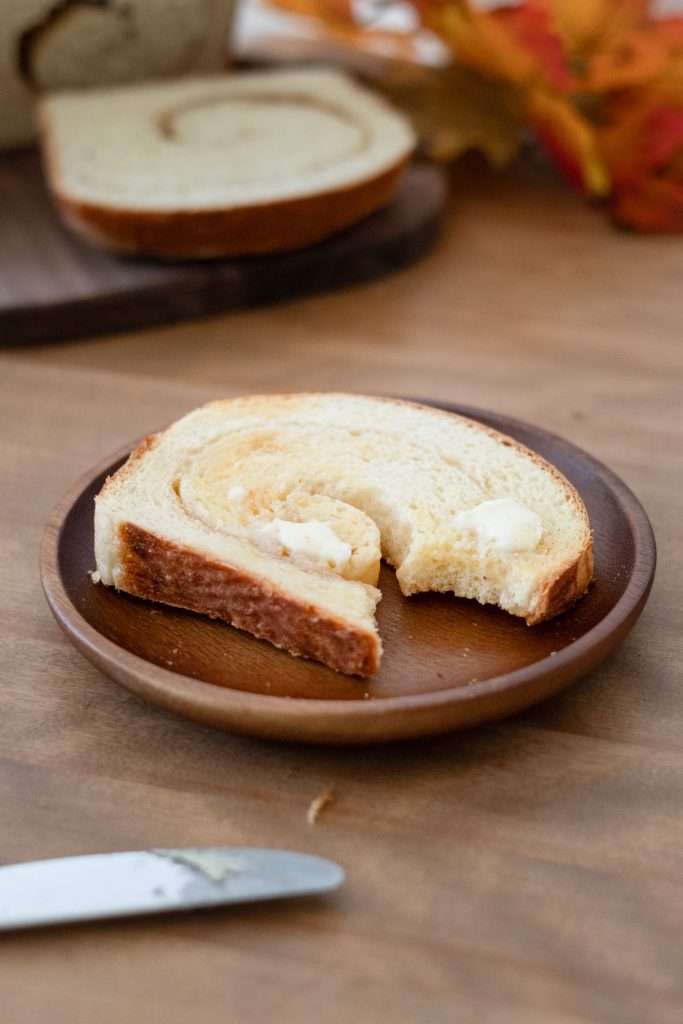
How to serve it
A slice with salted butter is a good place to start. For brunch, serve it with fresh fruit, coffee, and softly scrambled eggs.
It also works well toasted, with apple butter or a thin layer of jam. If you have slices left the next day, try them as French toast with a little extra maple syrup.
Storage & Make-Ahead
- Make ahead: Prepare the dough through its first rise, then refrigerate for 8–16 hours. Shape, proof and bake the following day.
- Room temperature: Once completely cool, keep the loaf well wrapped for up to 2 days. Toasting helps refresh slices as the bread ages.
- Freezer: Freeze the cooled loaf or individual slices, tightly wrapped, for up to 2 months. Slices are convenient for toasting straight from frozen.
Frequently Asked Questions
Can I make maple brioche without a stand mixer?
Yes, although this soft dough takes more effort by hand. Develop the dough before working in the butter gradually, using a knead-and-fold or slap-and-fold technique. Avoid adding lots of flour to make it easier to handle. A stand mixer is the more manageable option for this recipe.
Can I use active dry yeast?
Use the same amount, but first dissolve it in the lukewarm milk with a small spoonful of the measured maple syrup. Let it stand for 5–10 minutes, until foamy, then add it with the remaining wet ingredients. The rise may take longer.
What if I don’t have maple sugar?
You can use about ⅓ cup (65 g) packed light brown sugar for a brown sugar swirl. The loaf will still contain maple syrup, but the filling will have a more caramel-like flavour. Don’t substitute liquid maple syrup directly for the maple sugar.
Why is my brioche dough so sticky?
Eggs, syrup and butter make this a soft dough. It should become smoother and more elastic with kneading, but it won’t feel like a firm sandwich-bread dough. The overnight chill makes it easier to handle.
Why is my brioche loaf dense?
Common causes include too much flour, insufficient kneading or baking before the final rise is complete. Cold dough can take several hours to proof, so check that the loaf is very puffy before it goes into the oven.
How do I know when it’s baked?
The maple brioche loaf should be deeply golden. For a more reliable check, the centre of the bread should reach 190–195°F (88–91°C). Insert the thermometer into the bread rather than a pocket of filling.
Watch the Video
A Loaf Worth Waiting For
Maple brioche may not be the recipe you start when you’re craving bread in an hour, but that first soft, buttery slice makes all the waiting feel very reasonable. Serve it warm with salted butter, toast it the next morning or save a few slices for French toast-if it lasts that long. It rarely does in my house.
If you make this maple brioche, leave a comment and rating below. I’d love to hear how it turned out and whether you enjoyed it fresh from the loaf or toasted the next day.
Newsletter Sign-Up
Hungry for More Swiss Recipes?
If you’re curious about Swiss food beyond fondue and chocolate, you’re in the right place.
Subscribe to my newsletter and I’ll send you seasonal recipes, Swiss kitchen favorites, and the occasional family story straight from my Swiss-Canadian kitchen.


