
Swiss Apple Cake (Apfelkuchen)
A classic Swiss apple cake with a soft, tender crumb and lightly baked apples arranged on top. Subtly flavored with lemon and real vanilla, it’s the kind of cake that feels simple, elegant, and quietly special.

This post may contain affiliate links. I only share products I truly use and love, and any purchase helps support my work at no extra cost to you.
Looking for something specific?

A Swiss Kitchen Note on Apfelkuchen a.k.a. Öpfelturte
Switzerland has long embraced simple fruit cakes built around what’s in season. In apple-growing regions like Thurgau – often called Switzerland’s apple region – unfussy apple cakes like Apfelkuchen (or Öpfelturte if you want to be very Swiss) have long been part of everyday baking culture. Less sugary than many North American versions, they’re often served in the afternoon for “Zvieri” alongside coffee rather than as a heavy dessert.

What you’ll love about this Swiss apple cake recipe
- Light but still satisfying
- The crumb stays soft and tender, with just enough richness to feel like a proper cake without being heavy.
- Not overly sweet
- The apples carry the flavor, balanced with a hint of lemon and vanilla.
- Perfect for Zvieri
- This is exactly the kind of cake you slice into in the late afternoon with coffee or tea.
For more delicious apple recipes, check out my blog 10 Cozy Apple Recipes to Make This Fall
Key Ingredients Explained
You’ll find the full list of ingredients and their measurements in the recipe card below.

- The Best Baking Apples: Choose firm varieties that hold their shape and structure beautifully in the oven. A slight, crisp tartness works best to balance the buttery sponge. Honeycrisp, Braeburn, Granny Smith, Cortland, or Pink Lady are all excellent options.
- Real Vanilla Bean or Paste: Instead of extract, using the scraped seeds of a vanilla bean (or a high-quality vanilla paste) injects subtle flavor depth and beautiful little flecks throughout the crumb.
- Fresh Lemon Zest: Don’t skip this! A touch of fresh citrus zest acts as a flavor enhancer, perfectly lifting the richness of the butter and highlighting the fruit.
- Unsalted Butter & Whole Milk: Ensure your butter is properly softened at room temperature so it creams seamlessly with the sugar, creating a light, airy base. Whole milk keeps the crumb tender.
More Apple Bakes You May Like


FROM MY SWISS KITCHEN
A Little Taste of Switzerland, Every Week.
Swiss favourites, seasonal baking, and recipes worth making again. Join me for weekly cooking inspiration, delivered straight to your inbox.
Free recipes every week. Unsubscribe anytime.
Equipment Needed
- 9-inch (23 cm) springform pan
- Parchment paper
- Large mixing bowl
- Medium mixing bowl
- Electric hand mixer or stand mixer
- Rubber spatula
- Measuring cups and spoons
- Kitchen scale
- Apple peeler or vegetable peeler
- Sharp knife
- Cutting board
- Wire cooling rack
How to make Swiss Apple Cake

1. Prepare and Macerate the Apples
- Set aside; they will soften slightly and release their natural juices while you prep the batter.
- Peel, core, and thinly slice your apples (aim for uniform thickness so they bake evenly).
- Toss the slices immediately in a medium bowl with the lemon juice and 1 tablespoon of sugar.

2. Cream the Butter, Sugar, and Aromatics
- In a large mixing bowl or stand mixer, beat the softened butter, sugar, vanilla seeds, and lemon zest together.
- Baker’s Tip: Beat until the mixture looks pale, creamy, and noticeably fluffy. Taking an extra minute here builds the air needed for a delicate crumb.

3. Incorporate the Eggs One at a Time
- Add the eggs to the creamed butter one by one, mixing thoroughly after each addition.
- Note: If the batter looks slightly separated or curdled at this point, don’t worry – it will pull back together completely once the dry ingredients are introduced.

4. Alternate the Dry and Wet Ingredients
- In a separate bowl, whisk together the all-purpose flour, baking powder, and a pinch of salt.
- Add this dry flour mixture to your wet batter in two separate additions, alternating with the milk. Always start and finish with the flour.

5. Spread the Batter into the Pan
- Smooth the batter evenly into your prepared 9-inch springform pan.
- The batter layer will look relatively thin – this is intentional, allowing the apples to shine.
Why a Springform Pan? A springform pan is highly recommended for Swiss apple cakes. Because the delicate apple topping can easily stick to the edges of standard cake pans, the removable sides of a springform pan let you release the cake flawlessly without ruining your beautiful arrangement.

6. Arrange and Press the Apple Slices
- Lay the macerated apple slices gently over the top of the batter in overlapping rows or a concentric spiral pattern.
- Press them down lightly into the batter so they settle in comfortably as the cake rises around them.

7. Bake Until Golden and Set
- Transfer to a preheated oven at 350°F (175°C) and bake for 40 to 45 minutes.
- The Apfelkuchen is ready when the top is a beautiful golden brown, the edges pull away slightly, and a toothpick inserted into the cake center comes out clean.
8. Cool and Add a Simple Finish
- Let the cake cool in the pan for 10–15 minutes before releasing the sides.
- Serve it naturally rustic, dust it with a light layer of powdered sugar, or brush the warm top with a thin layer of apricot glaze for a professional, glossy finish.
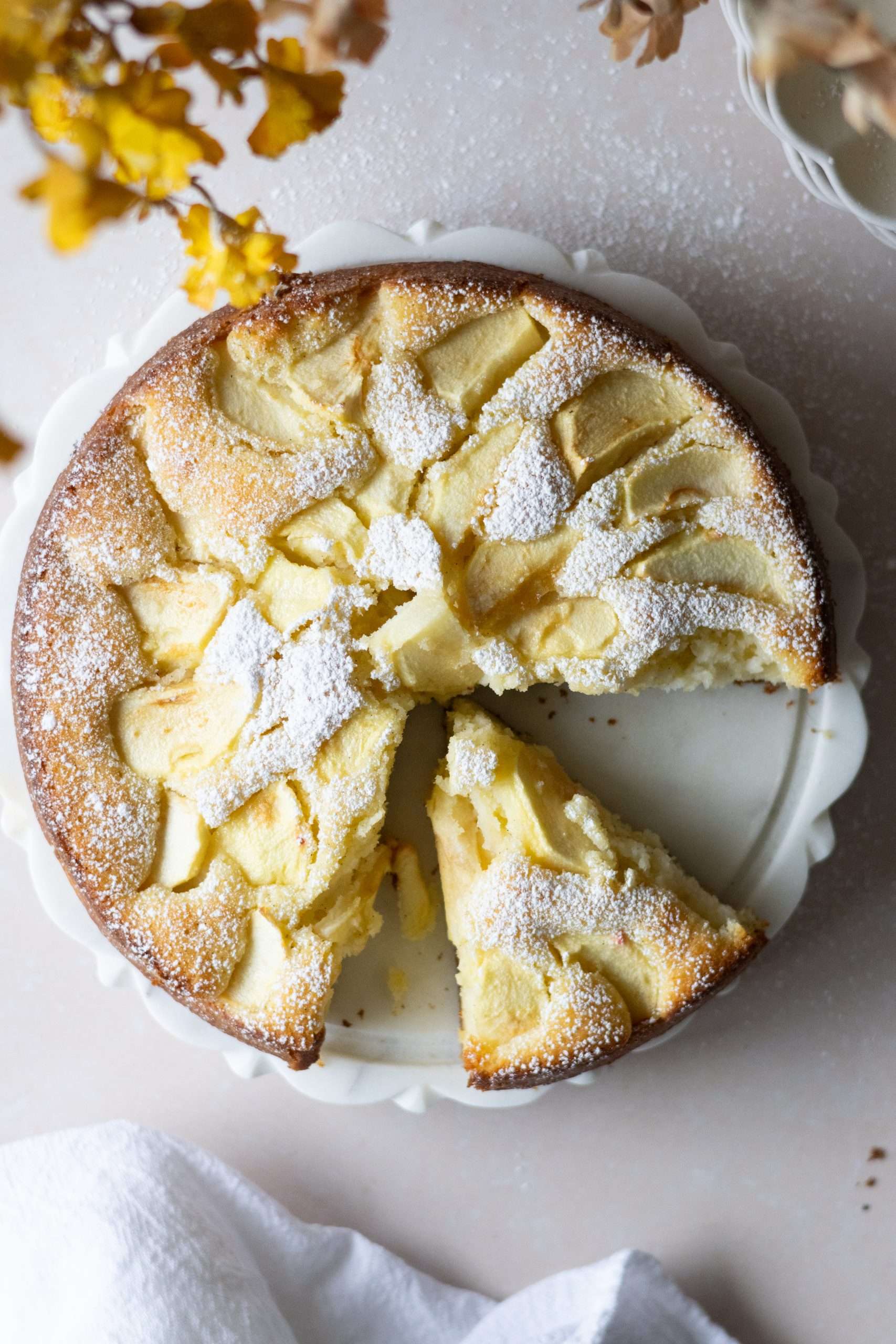
Swiss Apple Cake (Apfelkuchen)
Equipment
Ingredients
Method
- Preheat oven to 350°F (175°C). Grease and line a 9-inch (23 cm) springform pan with parchment paper.
- Peel, core, and thinly slice the apples. Toss with lemon juice and sugar, then set aside.
- In a large bowl, beat the softened butter, sugar, vanilla, and lemon zest until light and creamy.
- Add the eggs one at a time, mixing well after each addition.
- In a separate bowl, whisk together the flour, baking powder, and salt.
- Add the dry ingredients to the butter mixture, alternating with the milk. Mix just until smooth.
- Spread the batter into the prepared springform pan.
- Arrange the apple slices over the top, slightly overlapping them. Gently press some of the slices into the batter.
- Bake for 40–45 minutes, or until the cake is golden and a toothpick inserted into the center comes out clean.
- Let the cake cool in the pan for 10–15 minutes before removing the sides. Dust with powdered sugar or brush lightly with apricot glaze before serving.
Notes
Disclaimer: I am not a certified nutritionist. Nutrition facts are calculated using an automated database of common ingredients and are intended as an estimate only. Variations can occur depending on product brands, measuring methods, and ingredient swaps.
Did you make this recipe?
I'd love to know how it turned out!
How to Serve Swiss Apple Cake
Serve this cake slightly warm or at room temperature, depending on the moment. It’s simple enough to stand on its own, but pairs beautifully with a spoonful of crème fraîche or lightly whipped cream.
For something a little more dessert-like, you can add a drizzle of warm vanilla custard or serve it with a scoop of vanilla ice cream.
It’s also perfect as part of a late afternoon Zvieri – just a slice of cake with coffee or tea, nothing more needed.
Expert Baking Tips for the Perfect Apfelkuchen
- Slice the apples uniformly: Consistent thickness ensures all the fruit pieces bake through at the exact same rate.
- Do not overmix: Once the flour goes in, keep your mixing to a minimum. Over-activating the gluten can result in a dense or heavy sponge.
- Lightly anchor the fruit: Give the arranged apple slices a gentle tap down into the batter. They should be nestled in, not buried completely.
- Lean toward a slight under-bake: Keep a close eye on the oven around the 40-minute mark. It is better to pull the cake out when it is just set to preserve its soft, moist texture and prevent dryness.
Storage & Make-Ahead
Storage
Store the Apfelkuchen covered at room temperature for up to 1 day. After that, refrigerate for up to 3 days. Bring to room temperature before serving, or warm slightly to bring back its softness.
Make ahead
This cake can easily be made a day in advance, which actually allows the flavors to settle and develop. If you’re glazing it, you can do that just before serving for the best finish.
Freezing
Swiss apple cake freezes well. Wrap tightly and freeze for up to 2 months. Thaw at room temperature.

Frequently Asked Questions
What apples are best for Swiss apple cake?
Firm apples that hold their shape when baked work best, such as Honeycrisp, Braeburn, or Cortland. A slightly tart apple helps balance the sweetness of the cake.
Do I need to peel the apples for this European apple cake?
Peeling gives a softer, more delicate texture, but you can leave the skins on for a more rustic look and a bit of added texture.
Can I make this Swiss apple cake ahead of time?
Yes, this cake is actually very well suited to being made a day in advance. The texture stays soft and the flavors settle nicely.
Why is my apple cake dense or heavy?
This usually comes from overmixing the batter or adding too many apples. Mix just until combined and keep the apple layer balanced so the cake can bake evenly.
Can I use less sugar in this apple cake recipe?
You can reduce the sugar slightly (by about 10–20 g), but keep in mind that the sugar contributes to both texture and moisture, not just sweetness.
How do I know when the apple cake is done?
The top should be lightly golden and the center should feel set. A toothpick inserted into the cake (not the apple) should come out clean or with just a few moist crumbs.
Can I freeze Swiss apple cake?
Yes, it freezes well. Wrap it tightly and freeze for up to 2 months. Thaw at room temperature before serving.
Why did my apples sink into the cake so much?
If the apples are very heavy or pressed in too deeply, they can sink more than expected. Lightly pressing them into the batter helps them settle without disappearing.
What is the best pan for Swiss apple cake?
A 9-inch (23 cm) springform pan works best for Swiss apple cake because it makes the cake easier to remove without disturbing the apple topping. You can also use a regular 9-inch round cake pan, but line it well with parchment and let the cake cool slightly before removing it.
Watch the Video
This is the kind of cake you don’t overthink – simple ingredients, a few apples, and something warm coming out of the oven not long after. It’s easy to make, easy to share, and the kind of recipe that quietly becomes part of your routine.
If you enjoy recipes like this – simple, seasonal, and rooted in Swiss tradition – I share more of them in my newsletter, along with new recipes, behind-the-scenes moments, and a closer look at the stories behind the food.
You can sign up here and have them sent straight to your inbox.
NEWSLETTER SIGN-UP
A Little Taste of Switzerland in Your Inbox
Traditional Swiss favourites, seasonal recipes, and a few family traditions along the way. Join me every week for a little inspiration from the Swiss kitchen.


Hi Christine,
Thank you for this superb recipe. I will try it for sure. I love this kind of dessert.
Have a great day,
Marthe
Hi Marthe, thank you so much! I hope you enjoy the apple cake. Do let me know how it turns out when you make it!
Christine