
Authentic Swiss Cheese Fondue – A Classic Gruyère, Emmental & Vacherin Recipe
The magic of Swiss cheese fondue comes from the balance of cheeses and the slow ritual of eating together. This is the version I grew up with – and the one most commonly found in Swiss homes – it uses Gruyère, Emmental, and a small amount of Vacherin Fribourgeois for extra creaminess.

This post may contain affiliate links. As an Amazon Associate, I earn from qualifying purchases, which helps support my work at no extra cost to you. Thank you for supporting Poetic Road.
Table of Contents
If you love classic Swiss dishes like crispy Rösti, Älplermagronen (Swiss Mac n’ Cheese), or a warm bowl of Gerstensuppe (Swiss Barley Soup), Swiss cheese fondue belongs right beside them in the Swiss Comfort Food category.
What you’ll love about this Swiss Cheese Fondue recipe
- A perfectly balanced blend of three classic Swiss cheeses
- Smooth, creamy texture without separating
- Easy to prepare in about 20 minutes
Ingredient Notes
You’ll find the concise list of ingredients in the recipe card below, but here’s a quick, in-depth look at what makes Swiss Cheese Fondue so delicious:

Gruyère
Gruyère is one of Switzerland’s most famous cheeses. It’s firm, nutty, and melts beautifully, which makes it the backbone of many classic dishes – from fondue to Älplermagronen.
Emmental
Recognizable by its famous holes, Emmental melts smoothly and helps keep the fondue stretchy and silky.
Vacherin Fribourgeois
This cheese comes from the canton of Fribourg and is what gives fondue its luxurious creaminess. It melts softer than Gruyère, making the texture beautifully smooth.
Outside Switzerland it can be harder to find – but there are good substitutes.
Best Substitutes for Vacherin Fribourgeois
- Best substitute: Raclette cheese
- Very good substitute: Comté
- Also works: Appenzeller (stronger flavor)
- If needed, you can simply increase the other cheeses.
- Easy substitution ratio: 500 g Gruyère & 300 g Emmental
More Classic Swiss Dishes to Try


FROM MY SWISS KITCHEN
A Little Taste of Switzerland, Every Week.
Swiss favourites, seasonal baking, and recipes worth making again. Join me for weekly cooking inspiration, delivered straight to your inbox.
Free recipes every week. Unsubscribe anytime.
Equipment You’ll Need:
- Fondue pot (caquelon) – A traditional ceramic fondue pot helps the cheese heat evenly and stay smooth.
- Fondue burner and stand – Keeps the fondue warm at the table.
- Fondue forks – Long forks make dipping bread easy and safe.
- Cheese grater – Freshly grated cheese melts more smoothly than pre-shredded.
- Wooden spoon – For stirring the fondue as it comes together.
- Small serving bowls – Perfect for cornichons, pickled onions, and other traditional accompaniments.
How to make Cheese Fondue the Swiss Way

Step 1 – Rub the pot with garlic
Start by cutting a garlic clove in half and rubbing the cut side all around the inside of your fondue pot.
This is one of those little classic fondue steps that feels almost too simple to matter – but it does. It perfumes the pot with a light garlic flavor without making the fondue taste harsh or overpowering. You want the garlic to whisper, not shout.
If you love garlic, resist the urge to mince it straight into the cheese. Traditional fondue is meant to taste like cheese first.
Step 2 – Warm the wine gently
Pour the white wine into the pot and place it over medium to medium-low heat.
You want it hot enough that it’s steaming and clearly warmed through, but not bubbling like crazy. Think “getting cozy,” not “rolling boil.” If the wine gets too hot too fast, it can make the cheese seize or turn stringy later on.
This is also the moment where you can add a small squeeze of lemon juice if you like. It’s not always included, but a little acidity helps keep the fondue smooth and stable.

Step 3 – Add the cheese slowly, not all at once
This is the most important part, so no dramatic dump-and-stir situation here.
Add the grated cheeses by the handful, stirring gently as each addition melts before adding the next. I like to start with a little Gruyère and Emmental first, then keep going, with the Vacherin mixed in throughout.
The key is patience. If you throw all the cheese in at once, it’s much harder to get that smooth, creamy texture you want. Slow and steady really does win here.

Your cheese won’t melt smoothly right away; you’ll need some patience, but the trick here is to NEVER STOP STIRRING.
I start by folding the cheese into the wine (just as I would a cake batter). Once the cheese is melted and no longer clumpy, I switch to stirring it in a figure-eight motion (exactly how my mother always instructed me to do). It helps the cheese melt evenly and keeps everything moving without overworking it.

Step 4 – Stir until the fondue is smooth and glossy
As the cheese melts, keep stirring and watching the texture.
At first, it may look a little messy – slightly stringy, a bit lumpy, maybe not very promising. That’s normal. Give it a minute. Once the cheeses fully melt together with the wine, it should become creamy, glossy, and thick enough to coat the spoon.
You’re looking for fondue that flows slowly, not a pot of cheese glue and not something watery either. It should feel rich and silky.
If it looks too thick, a small splash of warm wine can help loosen it. If it seems too thin, just keep stirring a little longer before deciding it needs anything.
Step 5 – Add the cornstarch and kirsch
In a small bowl or cup, stir the cornstarch and kirsch together until smooth, then pour that mixture into the pot.
This little slurry is what helps bring everything together and keeps the fondue from separating. It’s not there to make it stodgy – just to stabilize it and give it that lovely cohesive texture.
Once it goes in, keep stirring for another minute or two. You should notice the fondue becoming a little smoother, a little shinier, and more beautifully unified.
And the kirsch? That’s not just for tradition. It adds a subtle sharpness that lifts the richness of the cheese.

Step 6 – Season gently
Add a few grinds of black pepper and, if you like, a tiny pinch of nutmeg.
I’d keep the seasoning restrained here. Fondue doesn’t need much fussing. The cheeses already bring plenty of flavor, and the wine and kirsch do a lot of the background work.
Swiss cheese fondue is one of those dishes where simplicity is part of the charm.
Step 7 – Move it to the table and keep the heat low
Once the fondue is smooth, transfer the pot to your table burner and set it over low heat.
This part matters more than people think. Too little heat, and the fondue starts to tighten up and get sluggish. Too much heat, and it can scorch on the bottom or separate. You want a gentle, steady warmth that keeps it molten without cooking it further.
Give the fondue a stir every so often while eating, especially as the pot starts to empty.
Step 8 – Dip properly and eat it the Swiss way
Now for the fun part.
Spear a cube of crusty bread – ideally one with a bit of crust on it, because that helps it stay attached to the fork – and dip it into the cheese, giving it a little twirl to coat.
And this is where I’ll put on my Swiss hat for a moment: traditional fondue is not usually a free-for-all of random dippers. In a proper Swiss cheese fondue, the main event is bread, with cornichons and pickled pearl onions on the side. The sharp, briny pickles cut through the richness beautifully.
So yes, this is the moment for bread, cheese, conversation, and keeping an eye on anyone who drops their piece into the pot.
Losing Your Bread: A Little Swiss Fondue Tradition
Fondue always comes with a bit of playful tradition – especially when someone loses their bread in the pot.
Because everyone is sharing the same pot, dropping your bread means fishing around in the cheese with your fork… which tends to slow things down. So over time, Swiss fondue dinners developed a few “penalties” for the culprit.
Depending on the table, the person who drops their bread might have to:
• buy the next bottle of wine
• sing a song
• do the dishes
And in some of the more mischievous traditions, they’ll have to either take a shot of kirsch or kiss the person sitting to their left.
Like many Swiss cheese fondue customs, the exact rule varies from table to table – which is part of what makes a fondue evening so fun.

Step 9 – Don’t forget the bottom of the pot
As the cheese fondue gets low, a golden crust will begin forming at the bottom of the caquelon.
That crispy layer is called la religieuse, and for many people it’s the best bite of the night. Once the meal is nearly over, loosen it gently and break it into pieces to share.
Very Swiss. Very delicious. Very worth saving room for.
Variations & Substitutions
No alcohol version
• Replace the wine with vegetable broth
• Add a small squeeze of lemon juice for acidity
• The flavor will be milder, but still smooth and creamy
If your fondue gets too thick
• Stir in a small splash of warm white wine
• Add gradually – a little goes a long way
If your fondue is too thin
• Let it cook for another minute or two while stirring
• It will usually thicken on its own
No kirsch?
• Simply leave it out (it’s traditional, but not an absolute Swiss cheese fondue necessity)
• Or replace with a splash of white wine
• Or a tiny squeeze of lemon juice
Bread options
• Sourdough
• Baguette
• Country-style bread
→ Aim for bread that’s firm with a bit of crust
→ Slightly day-old is ideal (holds together better when dipped)
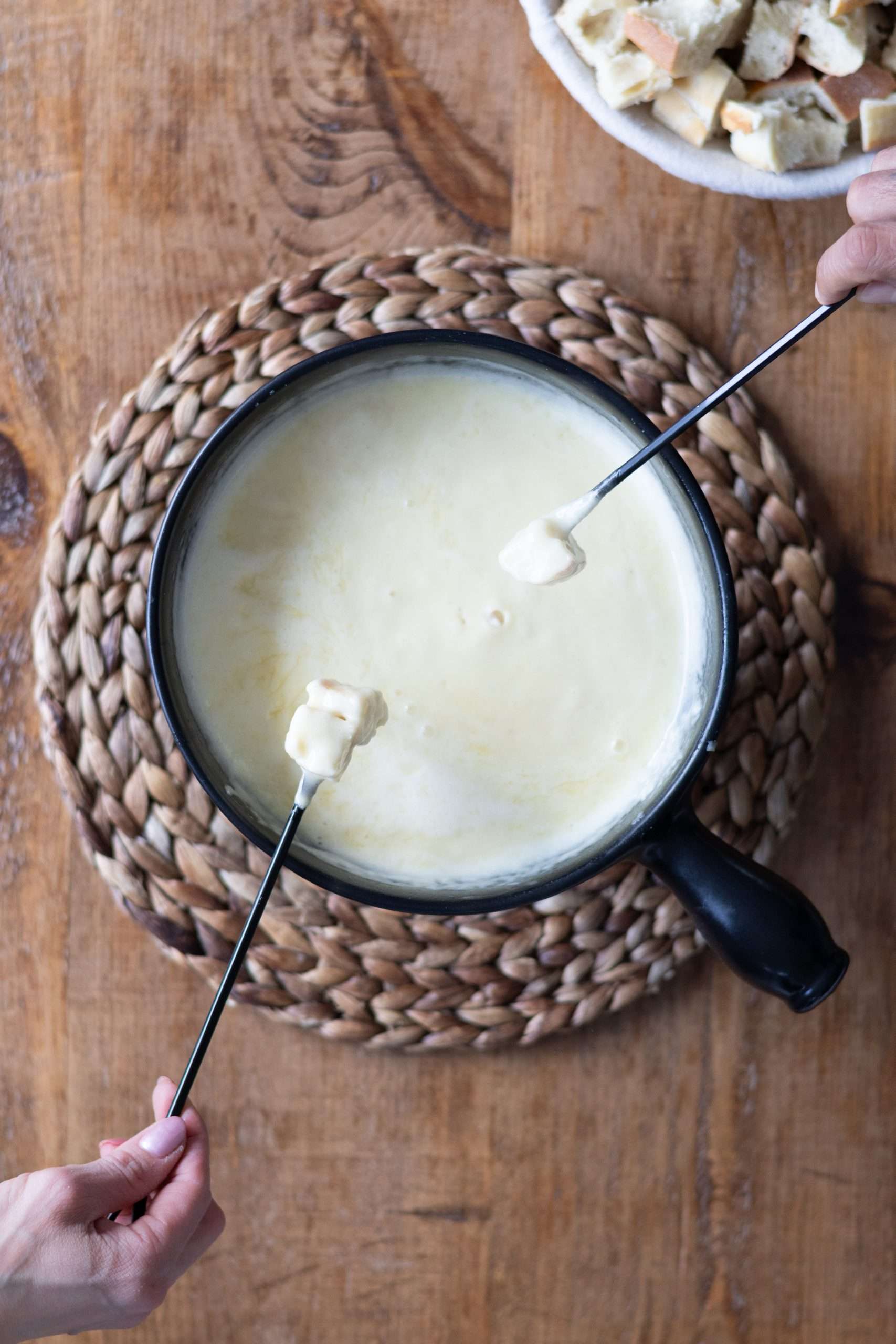
Classic Swiss Three-Cheese Fondue
Equipment
Ingredients
Method
- Rub the inside of a fondue pot with the cut side of the garlic clove to lightly flavor the pot.
- Pour the white wine into the pot and warm over medium-low heat until steaming, but not boiling.
- Add the grated cheese a handful at a time, stirring gently in a figure-eight motion and allowing each addition to melt before adding more.
- Continue stirring until the fondue becomes smooth, glossy, and fully melted.
- In a small bowl, mix the cornstarch and kirsch until smooth, then stir into the fondue.
- Season with black pepper and a pinch of nutmeg, if using.
- Transfer the pot to a fondue burner set over low heat, stirring occasionally to keep the texture smooth.
- Dip cubes of crusty bread into the fondue, twisting gently to coat, and serve with cornichons and pickled onions on the side.
Notes
- Add cheese gradually for the smoothest texture
- Keep heat low to prevent separation
- Use slightly stale bread so it holds together when dipped
- If fondue thickens, stir in a splash of warm white wine
Disclaimer: I am not a certified nutritionist. Nutrition facts are calculated using an automated database of common ingredients and are intended as an estimate only. Variations can occur depending on product brands, measuring methods, and ingredient swaps.
Did you make this recipe?
I'd love to know how it turned out!
The Traditional Way to Eat Swiss Fondue
In Switzerland, fondue isn’t just about melted cheese – it’s about the ritual around the table. The pot sits in the middle, everyone has their fork, and the meal unfolds slowly with conversation, laughter, and the occasional lost piece of bread.
What often surprises visitors is how simple a traditional Swiss cheese fondue table actually is. Unlike the restaurant versions you sometimes see outside Switzerland, where all sorts of foods get dipped into the pot, the Swiss approach focuses on just a few classic accompaniments that let the cheese shine.

Bread is the star
The classic dipper for Swiss fondue is bread – and really just bread. Look for a rustic loaf with a sturdy crust. Cut the bread into cubes, making sure each piece has a bit of crust. That crust helps the bread stay attached to the fork when you dip it into the cheese.
And here’s a little Swiss trick: slightly stale bread actually works better than fresh bread, because it holds together more easily in the melted cheese.
Pickles on the side
Alongside the bread, most Swiss cheese fondue tables include something bright and tangy to balance the richness. The two classics are:
• cornichons (gherkins)
• pickled pearl onions
They aren’t usually dipped into the cheese. Instead, you take bites between pieces of fondue to refresh your palate.
A little fondue etiquette
There are a couple of small customs that many Swiss tables follow.
Your fondue fork is used only for dipping. Once your bread is coated with cheese, slide it onto your plate and eat it with your regular fork. This keeps dipping forks from going straight from mouth to pot.
And when you dip your bread, give it a gentle twirl through the cheese to coat it evenly.
What to drink with fondue
The classic drink with fondue is dry white wine.
Traditional Swiss choices include:
• Chasselas (also called Fendant)
• Pinot Blanc
• Dry Riesling
Some Swiss families also serve black tea, which many people find helps balance the richness of the cheese.
One thing you’ll often hear at Swiss fondue tables is this rule:
Avoid drinking cold water with fondue.
The traditional belief is that cold water can cause the melted cheese to harden in your stomach, making digestion uncomfortable. Whether or not that’s scientifically true, many Swiss still stick with wine or tea and save the water for later.

Tips for the Perfect Swiss Fondue
- Grate the cheese finely – It melts faster and more smoothly.
- Use dry white wine – Sweet wines can make fondue taste unbalanced.
- Stir in a figure-eight – This keeps the cheese emulsified.
- Keep the heat low – If the fondue boils, the cheese can separate.
- Use day-old bread – It holds together much better.
Common Fondue Mistakes (And How to Fix Them)
Swiss cheese fondue is simple – just cheese, wine, and bread – but a few small missteps can turn a beautiful pot of silky melted cheese into something clumpy, oily, or stubbornly thick.
The good news is that most fondue problems are easy to avoid once you know what to watch for.
Here are the most common mistakes and how to fix them.
Adding all the cheese at once
It’s tempting to dump all the cheese into the pot and stir like crazy, but that’s one of the fastest ways to end up with lumpy fondue.
Cheese needs time to melt and blend smoothly with the wine. If too much goes in at once, it can melt unevenly and form clumps before it has time to emulsify.
What to do instead
Add the grated cheese one handful at a time, stirring gently until it melts before adding more.
It takes a little patience, but it makes all the difference.
Using heat that’s too high
Cheese is delicate. When the heat is too strong, the fats can separate from the proteins, leaving you with a fondue that looks oily or greasy.
You might also end up with a layer sticking to the bottom of the pot.
What to do instead
Keep the heat moderate and steady, both while melting the cheese and while serving the fondue at the table.
Fondue should stay warm and flowing – not boiling.
Not grating the cheese finely enough
Large chunks of cheese take longer to melt and can lead to uneven texture.
Pre-shredded cheeses can also be problematic because they often contain anti-caking agents that affect how the cheese melts.
What to do instead
Grate the cheese finely and fresh. It melts faster and blends more smoothly into the wine.
Skipping the acid
Wine isn’t just there for flavor. Its acidity actually helps keep the cheese smooth and prevents it from clumping together.
Without enough acidity, the cheese can tighten and become grainy.
What to do instead
Use a dry white wine, which provides the acidity fondue needs.
If you’re making an alcohol-free version, adding a small squeeze of lemon juice to broth can help achieve a similar effect.
Using bread that’s too fresh
Very soft bread tends to fall apart in the cheese – which means it may slip off your fork and disappear into the pot.
And as fondue traditions go, that can lead to penalties.
What to do instead
Choose a crusty rustic loaf and cut it into cubes that include a bit of crust.
Bread that’s a day old actually works best because it holds together when dipped.
Letting the fondue sit without stirring
Swiss cheese fondue thickens as it sits on the burner, and the cheese can settle toward the bottom of the pot.
If it’s left untouched for too long, it can begin to stick or become overly thick.
What to do instead
Give the pot a gentle stir every so often while eating. Think of it as tending the fondue while the conversation flows around the table.
If your fondue gets too thick
Sometimes fondue naturally thickens as it sits.
If that happens, simply stir in a small splash of warm white wine to loosen the texture.
A little goes a long way.
Storage & Make-Ahead
Classic cheese fondue is one of those dishes that’s really meant to be enjoyed fresh from the pot, while the cheese is smooth and bubbling and everyone is gathered around the table. But if you do end up with leftovers – or want to get a little prep done ahead of time – there are a few easy tricks.
Can You Make Fondue Ahead of Time?
Yes, with a small caveat. You can prep everything in advance, but it’s best to melt the fondue just before serving.
Prep ahead:
• Grate cheeses up to 1–2 days in advance
• Store in an airtight container in the fridge
• Cut bread a few hours ahead
• Leave loosely covered at room temperature
→ Slightly dry bread holds better when dipped
• Measure wine and kirsch ahead
→ Makes things seamless when guests arrive
How to Store Leftover Fondue
Let fondue cool completely
• Transfer to an airtight container
• Refrigerate for up to 3 days
→ The cheese will firm up – completely normal
How to Reheat Swiss Cheese Fondue
The key to reheating fondue is gentle heat and patience.
- Place the leftover fondue in a small saucepan.
- Warm it over low heat, stirring frequently.
- Add a small splash of white wine to loosen the texture.
As the cheese warms, it will gradually return to a smooth consistency.
Avoid high heat, which can cause the cheese to separate or become oily.
A Delicious Way to Use Leftover Fondue
Cold fondue actually makes an incredible cheese base for toast or grilled sandwiches.
Spread a little onto a slice of crusty bread, add another slice on top, and toast it in a pan with butter.
It’s basically a Swiss version of a grilled cheese – and honestly, it might be worth making extra fondue just for this.
Can Cheese Fondue Be Frozen?
Technically yes – but it’s not ideal.
The texture of melted cheeses like Gruyère and Emmental can change after freezing, sometimes becoming grainy when reheated.
If possible, it’s best to store fondue in the refrigerator and enjoy it within a few days.

Frequently Asked Questions
What is the best cheese for Swiss fondue?
The most traditional Swiss fondue uses a combination of Gruyère and Vacherin Fribourgeois, known as moitié-moitié (half-and-half).
In many Swiss homes – and especially outside Switzerland – fondue often includes Gruyère, Emmental, and a small amount of Vacherin Fribourgeois.
Each cheese contributes something important:
Gruyère adds deep nutty flavor
Emmental melts smoothly and keeps the texture elastic
Vacherin Fribourgeois adds creaminess and softness
Together they create a fondue that is rich, smooth, and perfectly balanced.
Why is my fondue clumpy?
Clumpy fondue usually happens when the cheese melts too quickly or the heat is too high.
A few simple tricks prevent this:
• add the cheese gradually rather than all at once
• keep the heat gentle
• stir constantly while the cheese melts
• use wine or another acidic liquid
The acidity in the wine helps keep the cheese emulsified and smooth.
Can you make Swiss fondue without alcohol?
Yes, although wine does help with flavor and texture.
If you prefer to avoid alcohol, replace the wine with vegetable broth and a small squeeze of lemon juice. The acidity helps mimic the stabilizing effect that wine normally provides.
The fondue will still be delicious – just slightly milder in flavor.
What bread is best for cheese fondue?
The best bread for fondue is crusty rustic bread that can hold up to dipping.
Great choices include:
sourdough
country bread
baguette
Slightly day-old bread actually works better than fresh bread, because it holds together more easily in the melted cheese.
Each cube should include a little crust so it stays firmly on the fork.
Why do Swiss people say not to drink water with fondue?
You’ll often hear this warning in Switzerland: don’t drink cold water with fondue.
The traditional belief is that cold water can cause the melted cheese to solidify in your stomach, making digestion uncomfortable.
Whether scientifically proven or not, many Swiss still prefer to drink white wine, tea, or kirsch with fondue and save water for later.
What happens if you drop your bread in the fondue?
Dropping your bread into the fondue pot is practically a rite of passage.
Because everyone shares the same pot, losing your bread means fishing around in the cheese with your fork, which tends to slow things down for everyone. Over time, Swiss fondue dinners developed a few playful “penalties” for the culprit.
Depending on the group, the person who drops their bread might have to:
• buy the next bottle of wine
• sing a song
• wash the dishes
• take a shot of kirsch
And in one of the more mischievous traditions, the offender has to kiss the person sitting to their left.
Like many fondue customs, the exact rule varies from table to table. Some families have their own versions, which is part of what makes a fondue evening so fun and memorable.
Can fondue be reheated?
Yes. Fondue reheats surprisingly well.
Warm it gently over low heat, stirring frequently, and add a small splash of white wine if the cheese seems too thick.
Avoid high heat, which can cause the cheese to separate.
What is the crust at the bottom of the fondue pot?
At the end of the meal, a golden crust forms at the bottom of the pot.
This crispy layer is called la religieuse.
Many fondue lovers consider it the best bite of the entire meal. Once the fondue is finished, break the crust into pieces and share it around the table.
What are you supposed to do if you drop your bread in fondue?
Dropping your bread into the fondue pot is a classic mishap, and it usually comes with a playful penalty.
Depending on the group, you might have to buy the next bottle of wine, take a shot of kirsch, or even kiss the person sitting to your left – fondue traditions vary from table to table.
Watch the Video
There’s something about a pot of cheese fondue that turns an ordinary evening into something a little more special – simple, comforting, and meant to be enjoyed together.
If you make this, let me know in the comments how it went (and whether anyone dropped their bread). And if you’d like more Swiss-inspired recipes like this, feel free to stick around or sign up for my newsletter so you don’t miss the next one.
NEWSLETTER SIGN-UP
A Little Taste of Switzerland in Your Inbox
Traditional Swiss favourites, seasonal recipes, and a few family traditions along the way. Join me every week for a little inspiration from the Swiss kitchen.


