
Swiss Marble Cake (Marmorkuchen)

This Swiss marble cake (Marmorkuchen) was the birthday cake my mother made for me every year – and yes, it was often eaten for breakfast. Soft, buttery and filled with dark chocolate swirls, it’s rich without being heavy, and it’s still my idea of a pretty perfect way to start a birthday.
This post may contain affiliate links. I only share products I truly use and love, and any purchase helps support my work at no extra cost to you.
What you’ll love about this recipe
- This Swiss marble cake is a true everyday cake – breakfast, snack, or dessert
- Moist and tender for days (no rush to finish it)
- Classic vanilla–chocolate marbling with real depth of flavor
- This Swiss marble cake requires zero frosting, no filling – it’s just a really good cake
Searching for something specific?
Ingredients you’ll need

Butter
Use real unsalted butter, fully softened. This Swiss marble cake relies on butter for both flavor and structure, so this isn’t the place to rush or substitute.
Eggs
Room temperature eggs help the batter emulsify properly and keep the crumb even – especially important for a tall Gugelhupf.
Chocolate
Dark chocolate works best in this Swiss marble cake recipe. Milk chocolate tends to disappear into the batter, while dark gives you those clearly defined swirls everyone hopes for.
Milk
Adding a small splash of milk to the chocolate portion keeps both batters baking evenly – a simple trick that makes a big difference.
Salt
Even in sweet cakes, salt matters. It sharpens the chocolate and keeps the cake from tasting flat.
More Delicious Baking Recipes


FROM MY SWISS KITCHEN
A Little Taste of Switzerland, Every Week.
Swiss favourites, seasonal baking, and recipes worth making again. Join me for weekly cooking inspiration, delivered straight to your inbox.
Free recipes every week. Unsubscribe anytime.
Equipment You’ll Need:
- 10–12 cup Bundt pan
- Large mixing bowl
- Medium mixing bowl
- Electric hand mixer or stand mixer
- Whisk
- Rubber spatula
- Measuring cups and spoons or kitchen scale
- Small microwave-safe bowl or double boiler, for melting the chocolate
- Wooden skewer or butter knife, for creating the marble swirl
- Wire cooling rack
- Fine-mesh sieve, for dusting with powdered sugar (optional)
Step-by-Step Instructions

Preheat & Prep the Pan
Start by preheating your oven to 350°F (175°C). Generously butter and flour your Gugelhupf pan or a large (10–12 cup) Bundt pan, making sure to get into all the grooves. Marble cakes are rich, and this extra care makes unmolding your birthday Gugelhupf stress-free later.

Cream the Butter and Sugar
In a large bowl, beat the softened butter and sugar together until pale and fluffy. This step sets the foundation for the cake, so give it a few minutes – the mixture should look lighter and feel airy.
Tip: If the butter still feels cool in the center, let it sit a few more minutes before starting.
Add the Eggs
Add the eggs one at a time, mixing well after each addition. The batter may look loose at this point – that’s exactly what you want. Stir in the vanilla extract.

Pour in the Milk
Slowly add the milk and mix just until smooth. Don’t rush this step; a calm, even mix here helps keep the crumb tender.
Fold in the Dry Ingredients
In a separate bowl, whisk together the flour, baking powder, and salt. Add this to the batter and mix just until combined. Stop as soon as the flour disappears – overmixing is the fastest way to make a Swiss marble cake heavy.

Make the Chocolate Batter
Transfer about one-third of the batter to a smaller bowl. Stir in the melted dark chocolate along with a tablespoon of milk. The chocolate batter should be just as spoonable as the vanilla batter.
Tip: If it feels thicker, add another small splash of milk.


Layer and Swirl
Spoon half of the vanilla batter into the prepared pan, followed by the chocolate batter, then top with the remaining vanilla batter. Use a knife or skewer to gently swirl once or twice – no more. You want visible ribbons, not a blended batter. (I kind of like to run it through once with the skewer upright and then to a few gentle “scoop and lift” moves- but not too many!)

Bake Slowly
Bake the Swiss marble cake for 55–65 minutes. If the top browns too quickly, loosely tent it with foil. The cake is done when a skewer inserted into the center comes out clean.
Rest, Unmold, and Enjoy
Let the cake rest in the pan for 10–15 minutes, then carefully turn it out onto a wire rack to cool completely. Once cooled, dust the Swiss marble cake lightly with powdered sugar if you like, slice generously, and enjoy.
This is the kind of cake that feels just as right with morning coffee as it does for an afternoon snack – and in my opinion I think it tastes even better the next day.


Swiss Marble Cake (Marmorkuchen)
Equipment
Ingredients
Method
- Preheat the oven to 350°F (175°C). Generously butter and flour a Gugelhupf pan or a large (10–12 cup) Bundt pan, making sure to get into all the grooves.
- In a large bowl, beat the butter and sugar together until pale and fluffy, about 3–4 minutes.
- Add the eggs one at a time, mixing well after each addition. Stir in the vanilla extract.
- Slowly pour in the milk and mix just until smooth.
- In a separate bowl, whisk together the flour, baking powder, and salt. Add to the batter and mix just until combined. Do not overmix.
- Transfer about one-third of the batter to a separate bowl. Stir in the melted dark chocolate and the tablespoon of milk until smooth and spoonable.
- Spoon half of the vanilla batter into the prepared pan. Add the chocolate batter, then top with the remaining vanilla batter. Gently swirl once or twice with a knife or skewer.
- Bake for 55–65 minutes, until a skewer inserted into the center comes out clean. If the top browns too quickly, loosely tent with foil.
- Let the cake rest in the pan for 10–15 minutes, then carefully turn out onto a wire rack to cool completely.
Notes
- For muffins: fill a standard muffin tin about ¾ full and bake 18–22 minutes.
- This marble cake keeps well for 2–3 days at room temperature and freezes beautifully.
Disclaimer: I am not a certified nutritionist. Nutrition facts are calculated using an automated database of common ingredients and are intended as an estimate only. Variations can occur depending on product brands, measuring methods, and ingredient swaps.
Did you make this recipe?
I'd love to know how it turned out!A Quick Note on Gugelhupf (and Why This One Looks Different)
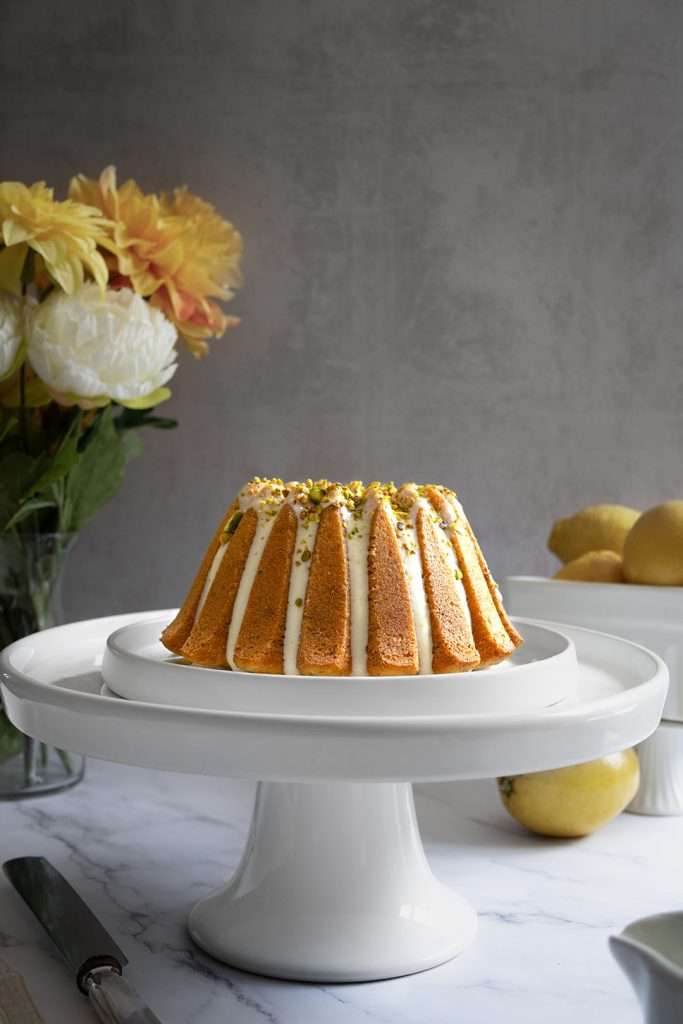
Traditionally, Gugelhupf refers to a yeasted cake – closer to a brioche – often studded with raisins and baked in a fluted mold lined with almonds. That version is especially common in Alsace and southern Germany, and it’s likely the one many of us grew up hearing about from parents or grandparents.
This cake, however, is the butter-cake version many Swiss families know and love today – a marble cake also known as Marmorkuchen, baked in a Gugelhupf mold. Same iconic shape, different personality. Instead of yeast and dried fruit, it leans into butter, eggs, and that familiar vanilla-and-chocolate swirl.
This Swiss marble cake may not be the “original” Gugelhupf, but it’s the one that showed up on our birthday tables – and the one that disappeared slice by slice over the course of a few days.

Making it perfect
This is an easy, forgiving cake – but a few small details make the difference between good and quietly excellent.
Take your time with the butter.
Fully softened butter creams more evenly with the sugar and sets up a tender crumb from the start. If it still feels cool in the center, give it a few more minutes.
Bring your eggs to room temperature.
Cold eggs can cause the batter to curdle slightly, which affects texture. Room-temperature eggs blend smoothly and bake more evenly in a tall Gugelhupf.
Loosen the chocolate batter.
Melted chocolate thickens batter – that small splash of milk keeps both batters baking at the same pace and prevents dense chocolate pockets.
Swirl gently.
A light hand is best. One or two passes with a knife or skewer is enough. Over-swirling turns the marbling in this Swiss marble cake into muddling.
Check early and tent if needed.
Gugelhupf-style cakes bake tall. If the top is browning before the center is done, loosely tent with foil and keep baking.
Let it rest before unmolding.
Ten to fifteen minutes in the pan helps the Swiss Marmorkuchen release cleanly and keeps the edges intact.
Storage & Make-Ahead
- Room temperature: Keeps well for 2–3 days, wrapped or under a cake dome
- Freezer: Freezes beautifully, whole or sliced, for up to 2 months
- Tip: Slice before freezing so you can pull out just what you need
This Swiss marble cake actually improves after the first day – the crumb relaxes, and the flavors settle.
Frequently Asked Questions
Watch the Video

This Swiss marble cake isn’t meant to impress with decoration or drama. It’s meant to be reliable, comforting, and quietly satisfying – the kind of cake that lives on the counter and somehow fits into every part of the day.
For me, it’s always been a birthday cake. Not because it’s fancy, but because it’s familiar – sliced in the morning, revisited in the afternoon, and remembered for where the chocolate swirls landed. A simple Gugelhupf, baked slowly, shared casually, and enjoyed exactly as it is.
If you bake this cake, I’d love to know how it turns out for you – especially where the chocolate swirl lands on your slice. You can leave a comment below, or tag me on Instagram @poetic_road so I can see your version. And if you enjoy recipes like this Swiss marble cake – the kind that work for breakfast, afternoon coffee, and everything in between – I’d love to have you on my newsletter (sign-up below). That’s where I share seasonal bakes, Swiss-inspired favorites, and the stories behind them.
NEWSLETTER SIGN-UP
A Little Taste of Switzerland in Your Inbox
Traditional Swiss favourites, seasonal recipes, and a few family traditions along the way. Join me every week for a little inspiration from the Swiss kitchen.


Turned out perfectly!
I’m so happy to hear that, Shelli! Thank you so much for taking the time to let me know!