
Swiss Spätzli Recipe (Easy Homemade Spaetzle)
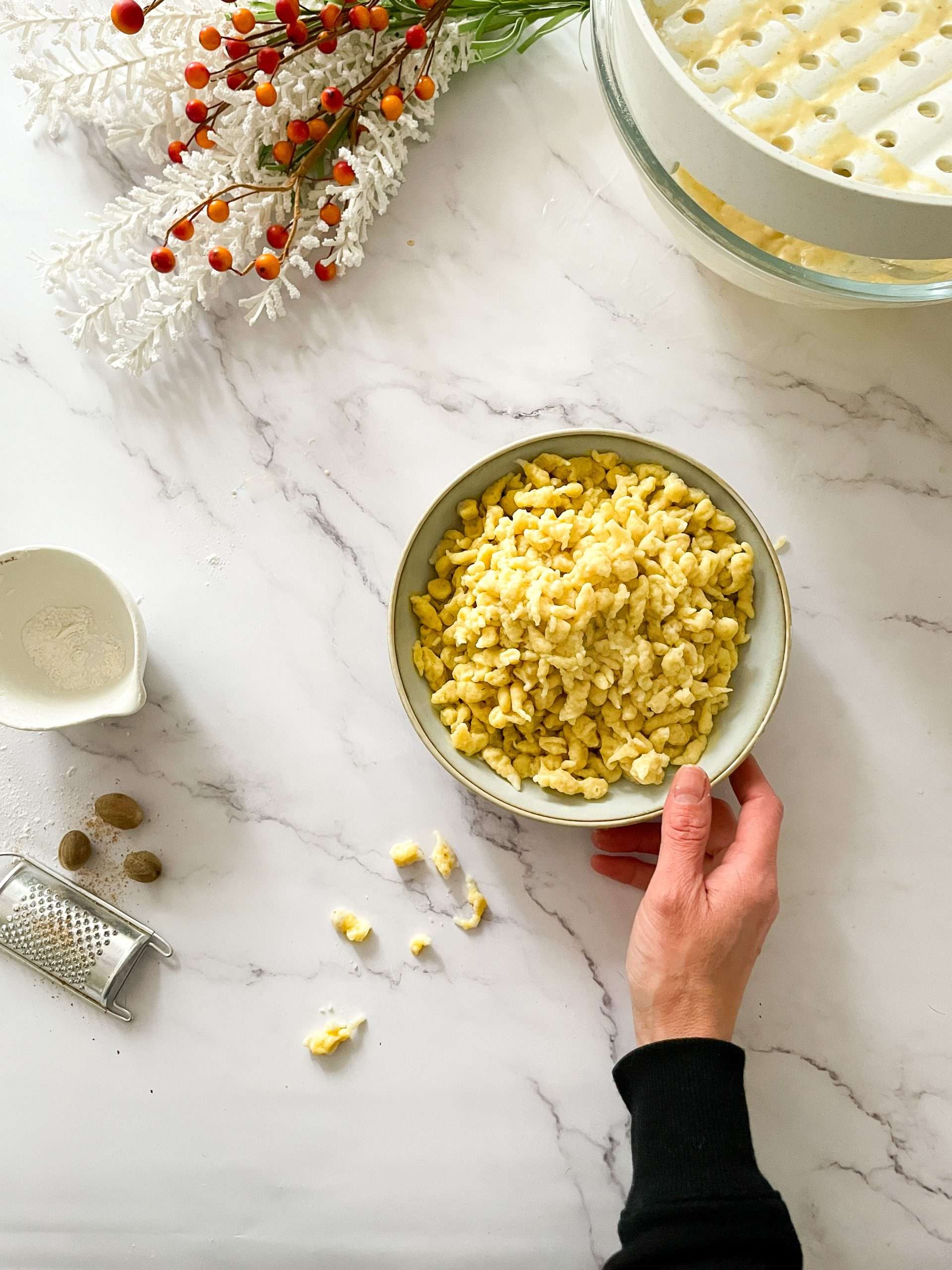
Spätzli are soft Swiss egg noodles made from a simple batter of flour, eggs and milk. They cook in minutes and are especially good with creamy sauces, roasted meats or simply tossed with butter.
Growing up, I watched my mom scrape the batter from a wooden board straight into simmering water. These days, I use a Spätzli maker because it’s quicker and considerably less likely to test my patience – but both methods work.

Searching for something specific?
This recipe may contain affiliate links, which may provide me with a small commission when used for purchase. I am grateful for your support!

Swiss Spätzli at a Glance
What they are: Soft Swiss egg noodles that sit somewhere between pasta and dumplings.
The batter: Flour, eggs, milk, salt and an optional pinch of nutmeg.
Cooking time: Just a few minutes once the batter has rested.
Best tool: A Spätzli maker is easiest, but the traditional board-and-knife method also works.
How to serve them: With butter, creamy sauces, roasted meat or Zürcher Geschnetzeltes.
Did You Know? Spätzli Has Different Names
Depending on where you are in Switzerland (or Germany), these little egg dumplings go by different names. In Switzerland, you’ll commonly hear Spätzli or Knöpfli – both made from the same simple batter, just shaped differently.
When they’re pressed into longer strands, they’re usually called Spätzli. When they fall into the water in small round “buttons,” they’re known as Knöpfli – which literally means “little buttons.”
Across the border in Germany, the spelling shifts to Spätzle, but it’s all the same delicious noodle.
The Core Ingredients for Authentic Swiss Spätzli
The complete list of ingredients and measurements can be found in the recipe card below.
All-Purpose Flour
Regular all-purpose flour gives the Spätzli enough structure while keeping them tender.
For the most consistent batter, measure the flour with a kitchen scale. Small differences in flour and egg size can change the texture, so you may still need to make a tiny adjustment with milk.
Eggs
Eggs provide richness, colour and structure. This recipe uses three large eggs.
Because egg sizes vary, use the batter texture as your final guide rather than worrying if yours looks slightly different at first.
Milk
Milk creates a richer, more tender Spätzli batter than water. I use regular dairy milk, but 2% or whole milk will both work.
If the batter is too thick after resting, add another tablespoon of milk at a time.
Salt
Salt seasons the noodles from within. The cooking water should also be generously salted, much like water used for ordinary pasta.
Nutmeg
A small pinch of freshly grated nutmeg adds gentle warmth and works particularly well when the Spätzli are served with cream sauce.
It’s optional. Your Swiss credentials will not be revoked if you leave it out.
Butter
Butter is used after boiling to keep the noodles from sticking and add flavour. You can simply toss the cooked Spätzli with melted butter or pan-fry them until lightly golden.

FROM MY SWISS KITCHEN
Join me at the kitchen table.
Swiss-inspired recipes, cozy baking, and seasonal stories delivered each week.
Seasonal recipes, Swiss stories, and no spam.
What Should Spätzli Batter Look Like?
Spätzli batter should be thicker than pancake batter but much softer than bread or pasta dough.
When lifted with a wooden spoon, it should fall back into the bowl in a slow, heavy ribbon rather than pour freely. It should look smooth, sticky and slightly elastic.
Traditionally, the batter is beaten until small air bubbles begin to appear. This helps develop its characteristic texture.
If the batter runs through the Spätzli maker like soup, it’s too thin. If you have to put your full body weight behind the scraper, it’s probably too thick.
Equipment Needed for this Recipe:
- Large mixing bowl
- Medium mixing bowl
- Whisk
- Wooden spoon
- Spätzli maker
- Large pot
- Slotted spoon
- Large skillet
- Measuring cups and spoons
- Kitchen scale, optional
- Small wooden cutting board and bench scraper or knife, optional for the traditional method
How to make Swiss Spaetzle

1. Mix the Dry Ingredients
In a large bowl, whisk together the flour, salt and nutmeg, if using.
Make a well in the centre.
2. Add the Eggs and Milk
In a separate bowl, whisk the eggs and milk together.
Pour the mixture into the well in the flour. Stir from the centre outward, gradually pulling in the flour until a thick batter forms.

3. Beat the Batter
Beat the batter firmly with a wooden spoon until smooth, stretchy and beginning to form small air bubbles.
This will take a few minutes and requires a little effort. The batter should fall slowly from the spoon in a thick ribbon.
If it feels excessively stiff, add milk one tablespoon at a time. If it pours too easily, add a small spoonful of flour.


4. Let the Batter Rest
Cover the bowl and let the batter rest at room temperature for 20–30 minutes.
The rest allows the flour to hydrate and gives the batter time to settle. It will usually thicken slightly as it sits, so check the consistency again before cooking.
If needed, stir in another small splash of milk.
5. Bring the Water to a Simmer
Bring a large pot of generously salted water to a boil, then reduce it to a steady simmer.
Avoid a very aggressive rolling boil, which can cause the delicate noodles to break apart.
Set a colander nearby and have a slotted spoon ready before you begin. Once the batter hits the water, things move fairly quickly.
6. Form the Spätzli
Place a Spätzli maker over the pot and add a portion of batter.
Press or scrape the batter through the holes directly into the simmering water. Work in batches so the noodles have room to cook and the water temperature doesn’t drop too much.
If using the traditional method, spread a thin layer of batter along the edge of a damp wooden board. Hold the board over the pot and use a knife or bench scraper to cut thin strips directly into the water.
The board method takes a little practice. I don’t consider using a Spätzli maker as cheating; it is simply a time-saving hack.
7. Cook Until They Float
The Spätzli will sink at first and then rise to the surface.
Once they float, let them cook for approximately another minute. Remove them with a slotted spoon and transfer them to a colander.
Repeat with the remaining batter.
Rinse briefly with cool water only if you’re making them ahead. If serving immediately, there’s no need.
8. Toss with Butter or Pan-Fry
For soft Spätzli, toss them with melted butter as soon as they’re drained.
For lightly golden edges, melt the butter in a large skillet and cook the drained Spätzli for a few minutes, turning occasionally.
Season with salt and pepper and add chopped parsley, if you like.

Tips for the Perfect Swiss Spätzli
- Pay Attention to the Batter: The exact consistency matters more than following the liquid measurement down to the final drop. Eggs and flour behave a little differently from one kitchen to another. The batter should be thick, sticky and able to fall slowly from a spoon.
- Beat Until Bubbles Appear: Beating the batter helps develop its stretchy texture. When small bubbles begin appearing, you’re in good shape.
- Let It Rest: Give the batter the full 20–30 minutes. This allows the flour to hydrate and makes the texture more consistent.
- Cook in Batches: Adding all the batter at once crowds the pot and lowers the water temperature. Smaller batches cook more evenly and are much easier to manage.
- Keep the Water at a Simmer: A steady simmer cooks the noodles gently. A wild rolling boil mostly throws them around for no good reason.
- Butter Them After Draining: A little butter prevents sticking and adds flavour. This is not the time to become unusually cautious with butter.


Swiss Spätzli (Homemade Egg Noodles)
Equipment
Ingredients
Method
- Whisk together the flour, salt and nutmeg in a large bowl. Make a well in the centre.
- In a separate bowl, whisk the eggs and milk. Pour the mixture into the flour well and stir until a thick batter forms.
- Beat the batter firmly with a wooden spoon until smooth, stretchy and beginning to form small air bubbles. It should fall slowly from the spoon in a thick ribbon.
- Cover and let the batter rest at room temperature for 20–30 minutes. If it becomes too thick, stir in milk one tablespoon at a time.
- Bring a large pot of generously salted water to a boil, then reduce it to a steady simmer.
- Working in batches, press the batter through a Spätzli maker directly into the simmering water.
- When the noodles rise to the surface, cook for approximately one additional minute. Remove with a slotted spoon and drain. Repeat with the remaining batter.
- Toss the cooked Spätzli with melted butter and serve, or pan-fry them in butter for a few minutes until lightly golden.
- Season with salt and pepper and add parsley, if desired.
Notes
- The batter should be thicker than pancake batter and fall slowly from a spoon.
- Add milk one tablespoon at a time if it is too stiff.
- Cook the Spätzli in batches to avoid crowding the pot.
- The board-and-knife method can be used instead of a Spätzli maker.
- Refrigerate cooked Spätzli for up to three days.
- Freeze cooked and cooled Spätzli for up to two months.
Disclaimer: I am not a certified nutritionist. Nutrition facts are calculated using an automated database of common ingredients and are intended as an estimate only. Variations can occur depending on product brands, measuring methods, and ingredient swaps.
Did you make this recipe?
I'd love to know how it turned out!
Storage & Make-Ahead
- Fridge: Store cooked Spätzli in an airtight container in the refrigerator for up to three days.
- Freezer: If making them ahead, rinse the cooked noodles briefly under cool water, drain well and toss with a small amount of butter or oil before refrigerating. This helps prevent them from clumping together.
- Reheating: Reheat your cooked spätzli in a skillet on the stove with butter until hot. You can keep them soft or let the edges become lightly golden.
Frequently Asked Questions
A Swiss Side Worth Knowing
Spätzli are simple, reliable and very good at making sure none of a creamy sauce gets left behind. Once you get the hang of the batter, they’re also much easier to make than they first appear.
If you try them, let me know whether you used a Spätzli maker or went fully traditional with the board and knife.
NEWSLETTER SIGN-UP
Hungry for More Swiss Recipes?
If you’re curious about Swiss food beyond fondue and chocolate, you’re in the right place.
Subscribe to my newsletter and I’ll send you seasonal recipes, Swiss kitchen favorites, and the occasional family story straight from my Swiss-Canadian kitchen.


Family loved this!as a swiss descendant, this dish is a must.
Thank you so much, Roland! It means a lot to hear that your family enjoyed the recipe, especially from someone with Swiss roots. (That makes me smile :)) Spaetzli is such a comforting dish. I’m so glad it was a hit in your home!