
Spring Carrot Rösti Recipe with Lemon and Herbs
A fresh take on classic Swiss rösti, made with carrot, lemon zest, and herbs for a lighter, spring-inspired twist. Crispy on the outside and tender inside, it’s perfect for Easter brunch or a simple seasonal meal.

Looking for something specific?
Rösti has always been one of those dishes I come back to again and again.
It’s simple, deeply comforting, and rooted in Swiss tradition – but it’s also incredibly adaptable. And this time of year, when everything starts to feel a little lighter, it’s the perfect canvas for something more seasonal. If you’re new to Swiss cooking, it’s one of the best places to start, alongside classics like Zürcher Geschnetzeltes or a simple Swiss brunch spread.
This spring carrot rösti recipe keeps that crisp, golden base we all love, but adds a gentle sweetness from carrot, brightness from lemon zest, and freshness from herbs. It’s the kind of dish that feels just right for an Easter table – or a slow weekend brunch when the light starts pouring back into the kitchen.

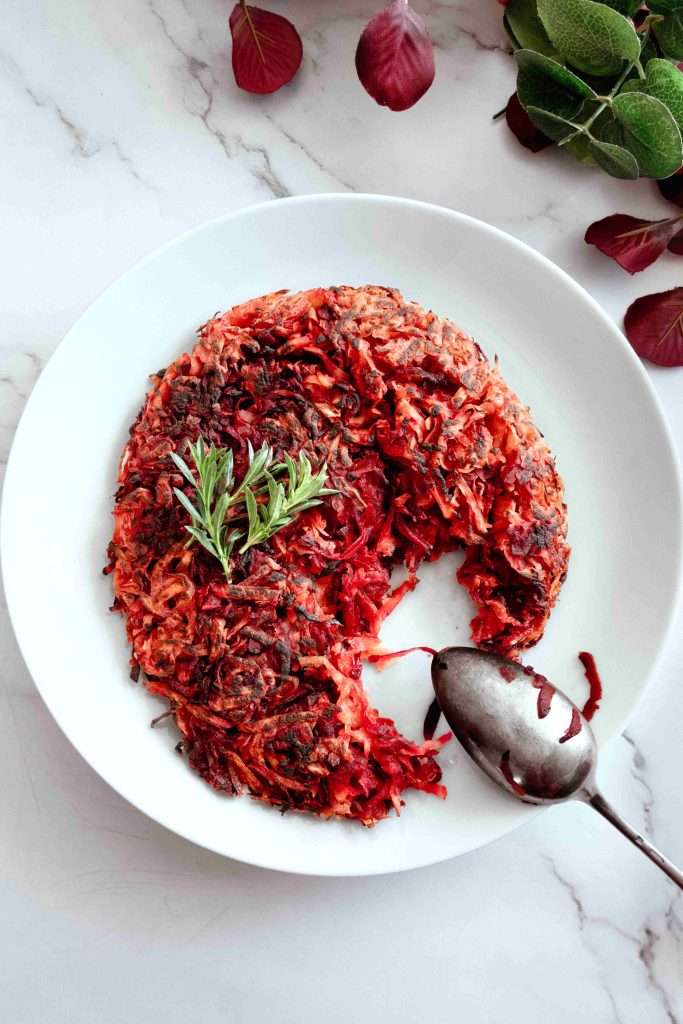
If you’ve never made rösti before, you may want to start with my classic Swiss rösti recipe, where I walk through the traditional method step-by-step. Once you’ve got that down, this version along with my colorful and crispy beet rosti, becomes an easy, beautiful variation.
This post may contain affiliate links. I only share products I truly use and love, and any purchase helps support my work at no extra cost to you.
What you’ll love about this carrot rosti recipe
- Carrot adds a soft sweetness and warm color
- Lemon zest lifts the potatoes without overpowering
- Chives and parsley bring that unmistakable fresh note
Ingredients Explained
You’ll find the concise list of ingredients in the recipe card below, but here’s a quick, in-depth look at what makes this carrot rosti recipe so delicious:
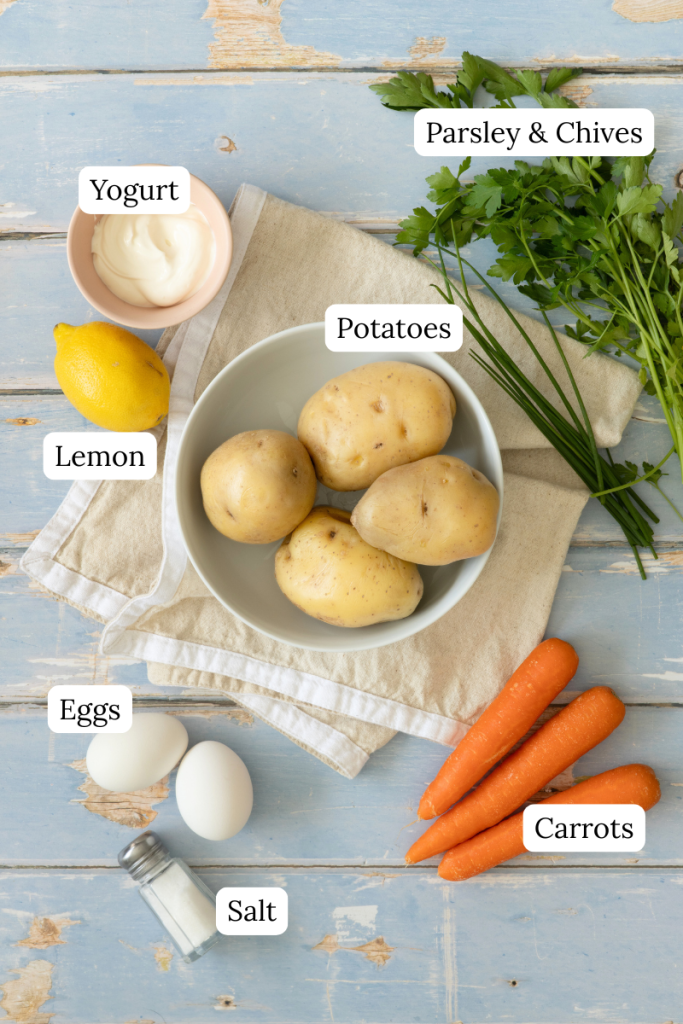
Potatoes (Yukon Gold / yellow potatoes)
These are the base of any good rösti. Yukon Golds are ideal because they strike the right balance between waxy and starchy, giving you a creamy interior and a crisp, golden crust. Parboiling them first helps create that signature texture.
Carrot
Carrot brings a gentle sweetness and a soft pop of color, making this version feel lighter and more seasonal. Keep it to about 20–25% of the mixture so the rösti still crisps properly, and lightly squeeze out excess moisture before mixing.
Fresh Herbs (Chives & Parsley)
Chives add a mild onion note, while parsley brings a clean, fresh flavor. Together, they brighten the dish and add subtle color throughout. Chop them finely so they blend in evenly.
Lemon Zest
Lemon zest lifts the entire dish without making it taste lemony. It adds brightness and helps balance the richness of the potatoes. Stick to zest only – juice would add too much moisture.
Butter and Oil
Using both gives you the best result. Butter adds flavor and color, while oil prevents burning and helps achieve a crisp crust.
Salt
Essential for bringing everything together. It enhances the potatoes and balances the sweetness of the carrot.
Optional: Nutmeg
A small pinch adds warmth and depth without standing out. It’s subtle, but it complements both the carrot and the potatoes nicely.



FROM MY SWISS KITCHEN
Join me at the kitchen table.
Swiss-inspired recipes, cozy baking, and seasonal stories delivered each week.
Seasonal recipes, Swiss stories, and no spam.
Step-by-Step Instructions
How to make this Carrot and Potato Rösti Recipe:
Step 1: Start with the potatoes
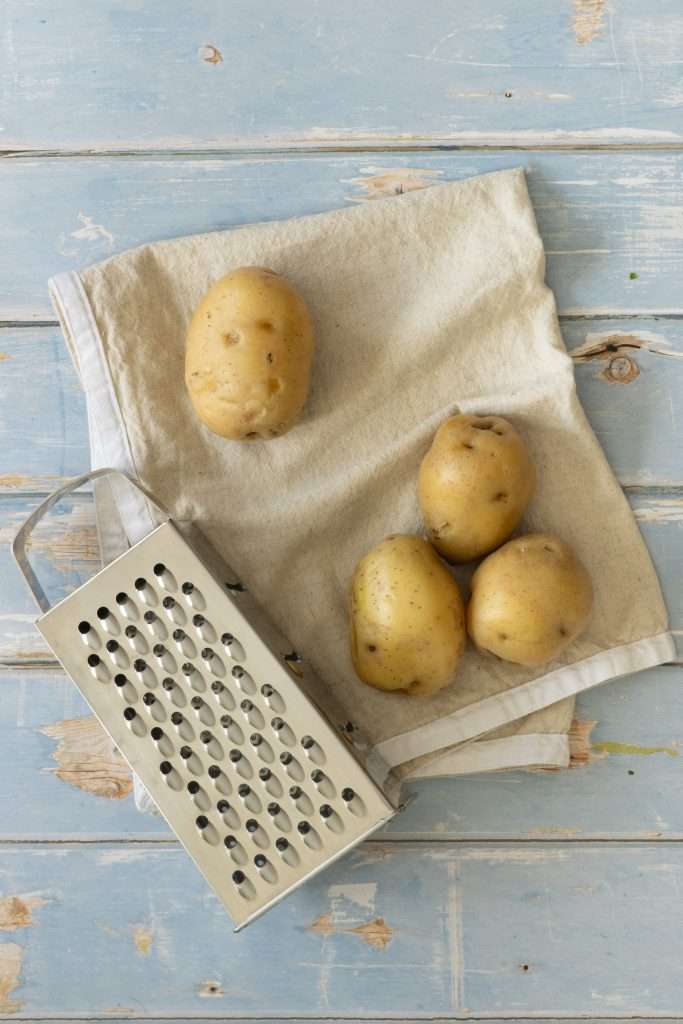
Place your whole potatoes in salted water and bring them to a gentle simmer. Let them cook for about 10–12 minutes – you’re not fully cooking them here, just softening the outside.
Drain and let them cool completely.
(This is what gives rösti that perfect texture later – don’t skip it.)
Step 2: Grate and prep
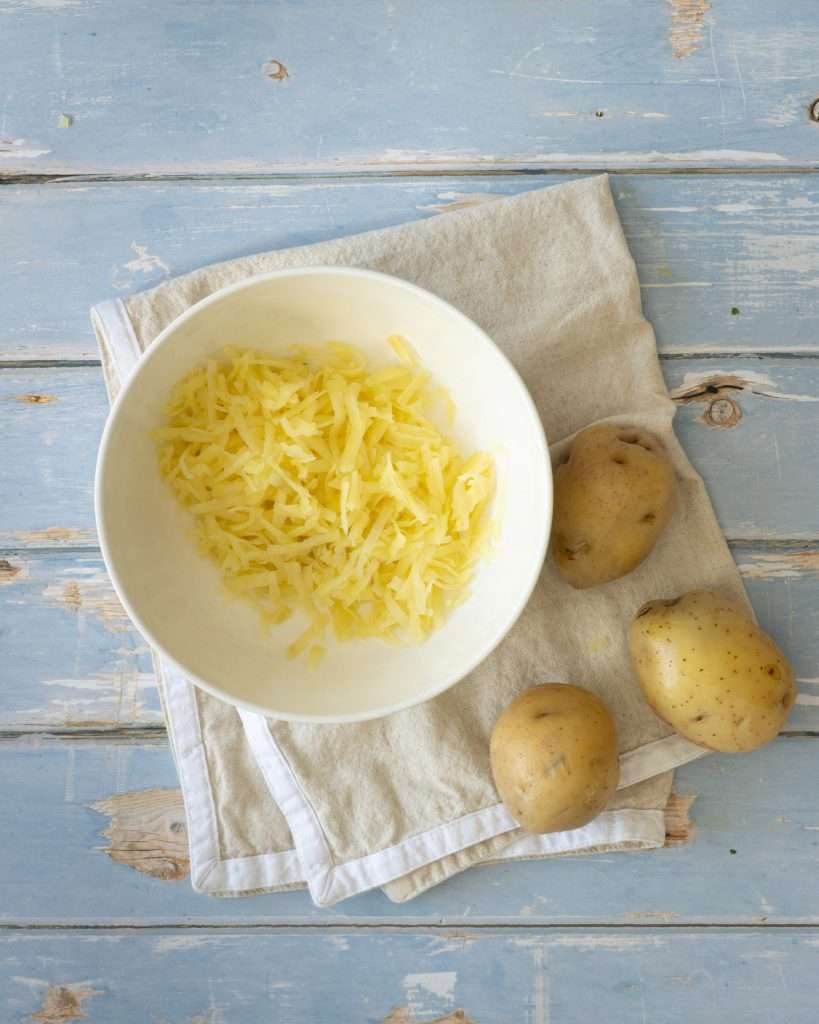
Once cooled, grate the potatoes using a coarse grater.
Grate your carrot separately, then give it a light squeeze in a clean towel. You’re just removing excess moisture – not drying it out completely.
This one small step makes a big difference in getting that crisp finish.

Step 3: Bring it together
In a bowl, gently combine:
- Grated potatoes
- Carrot
- Chives and parsley
- Lemon zest
- Salt (and a tiny pinch of nutmeg if using)
Use your fingers to toss everything lightly. You want to keep the strands loose – not packed or mashed.
Step 4: Into the pan
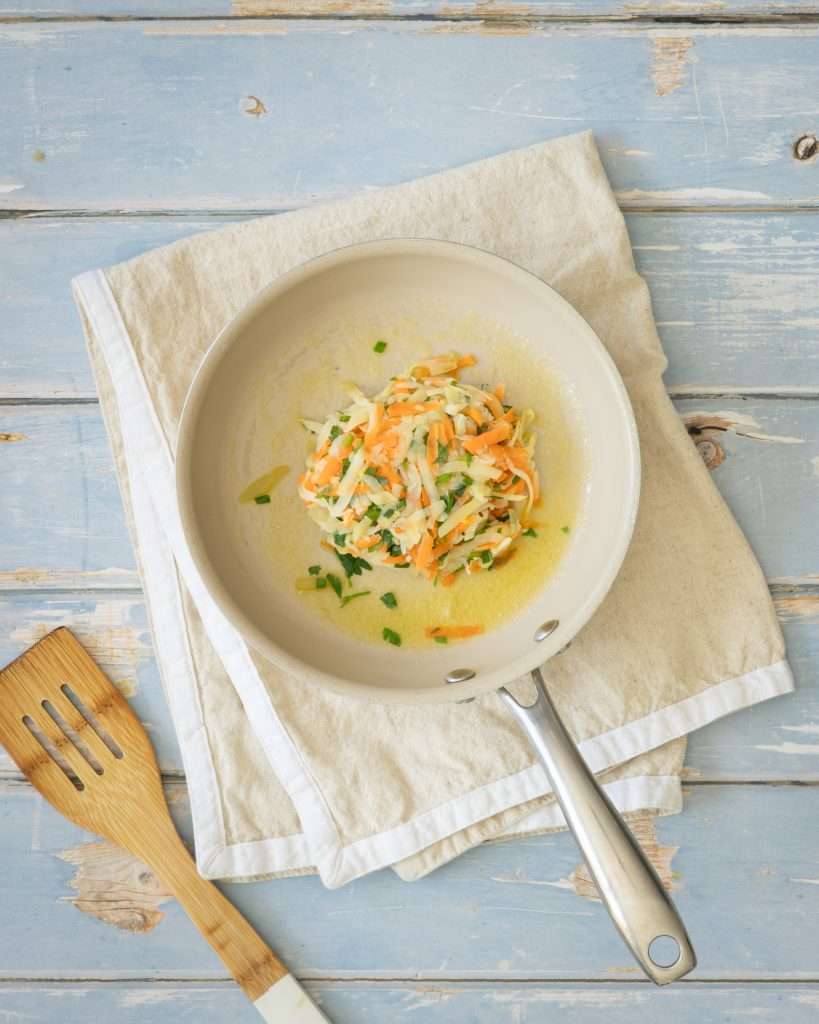
Heat butter and oil in a pan over medium heat.
Add the mixture and gently press it into a thin, even layer. Not too thick – about 1–2 cm is perfect.
Now… leave it alone.
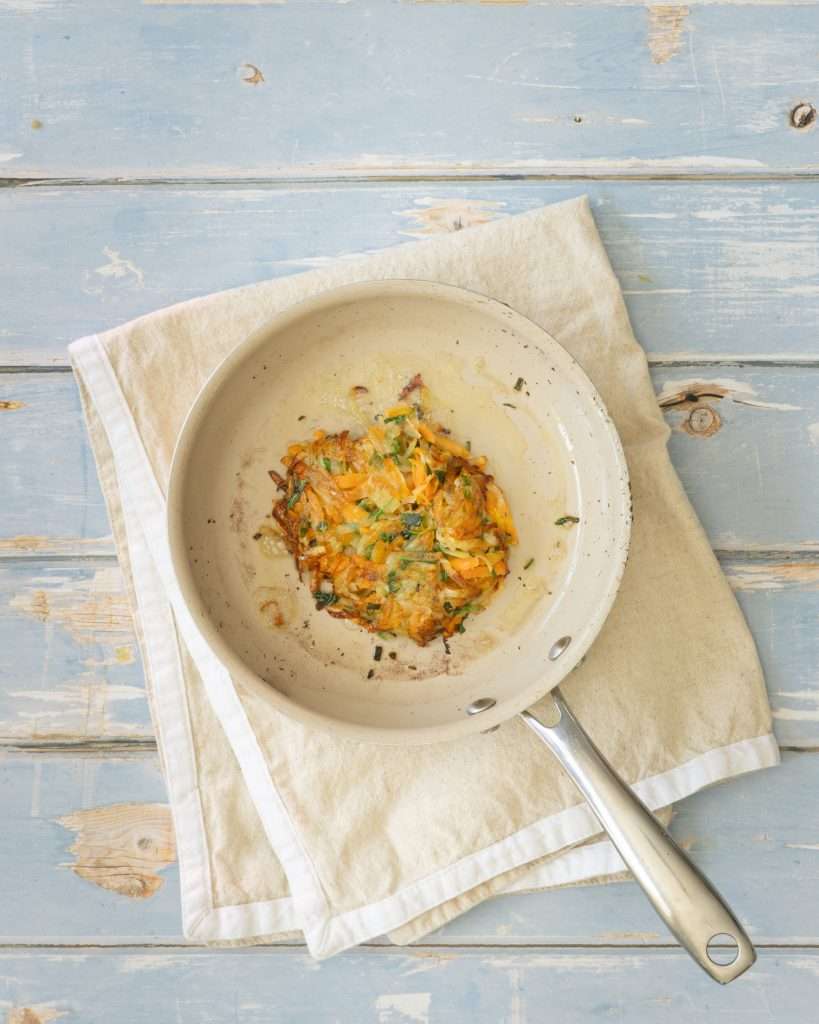
Let it cook undisturbed for a good 8–10 minutes. This is where the crust forms.
Step 5: The flip
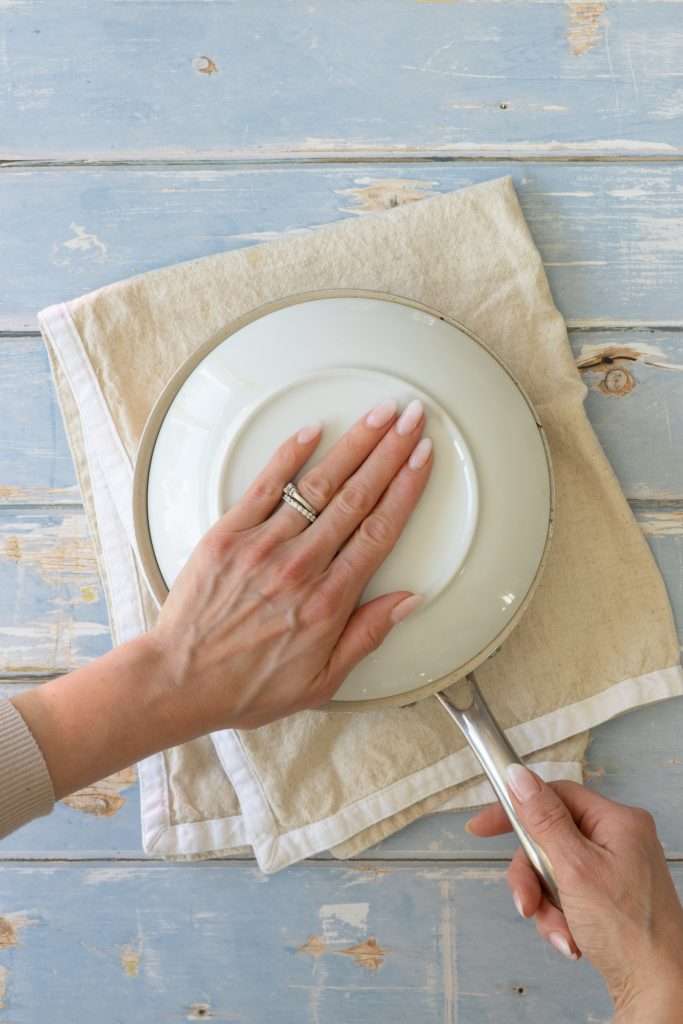
Once deeply golden underneath, slide the rösti onto a plate, flip it back into the pan, and cook the second side until equally crisp.
Step 6: Serve right away
Rösti waits for no one. If you make this carrot rosti recipe make sure to serve it warm, while the edges are still beautifully crisp.
To Serve (My Favorite Way)
I love serving this carrot rösti with a few simple additions that bring everything together.
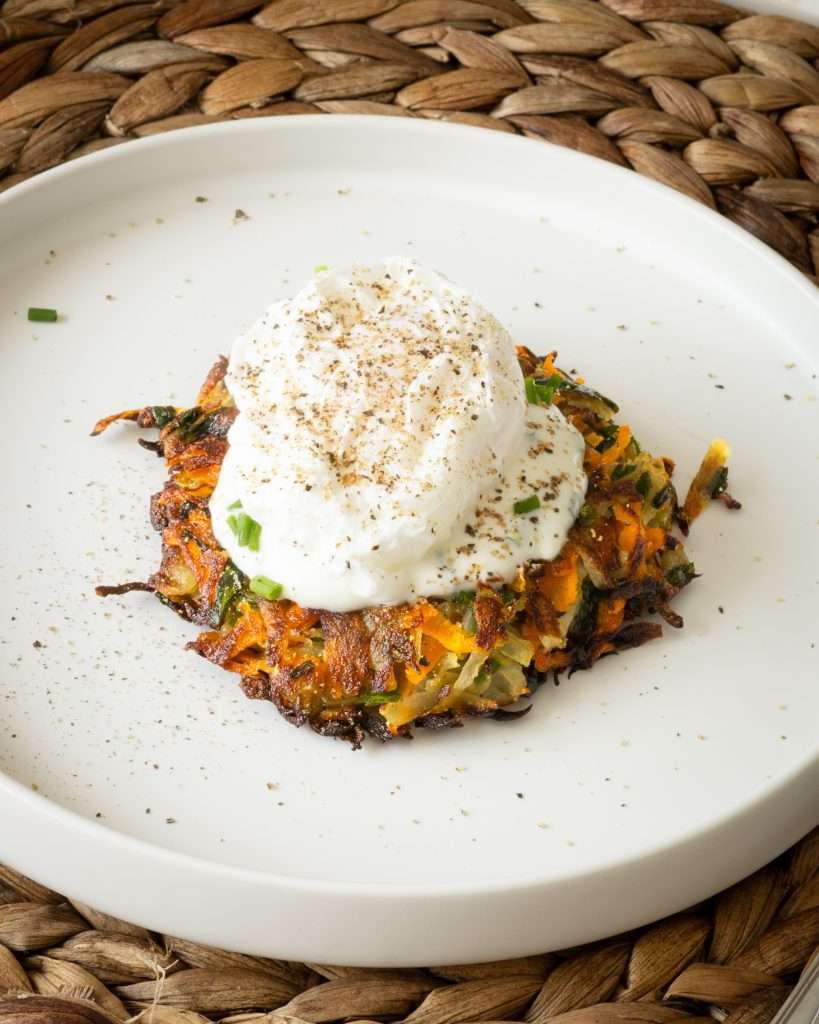
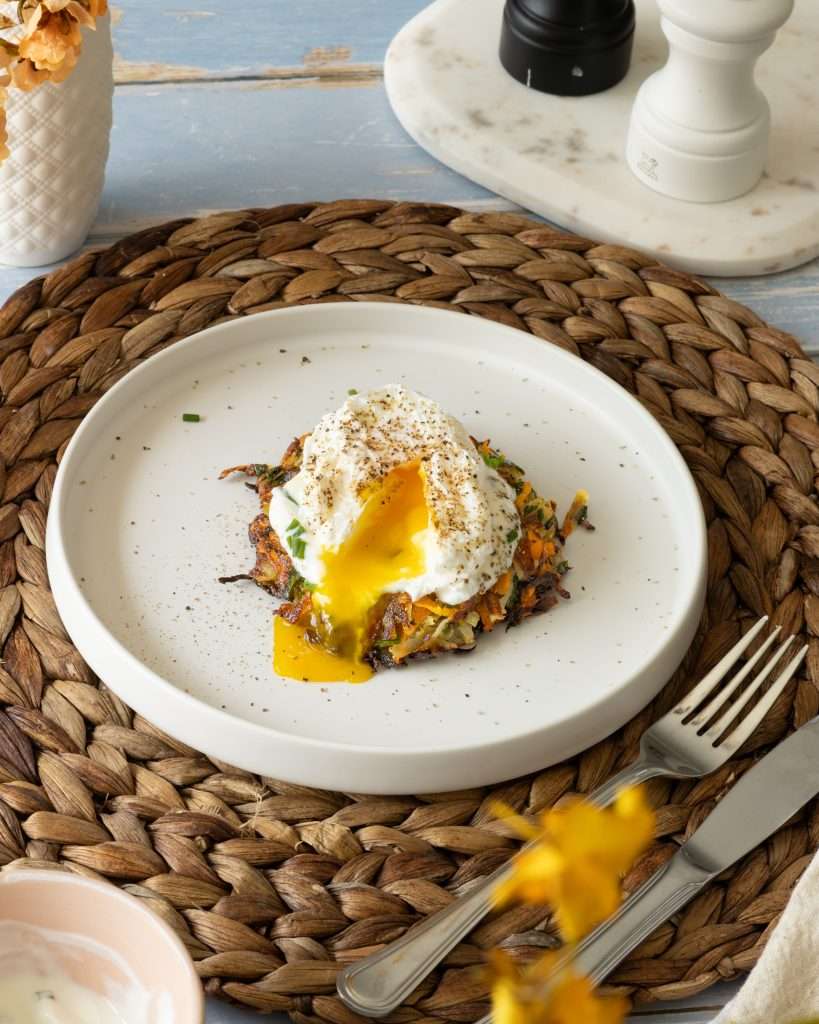
Top it with a soft poached egg and a generous spoonful of lemon herb yogurt. The richness of the yolk, combined with the brightness of the yogurt, works beautifully with the carrot and herbs.
If you have it on hand, a few sautéed asparagus spears or peas make it feel even more like spring.
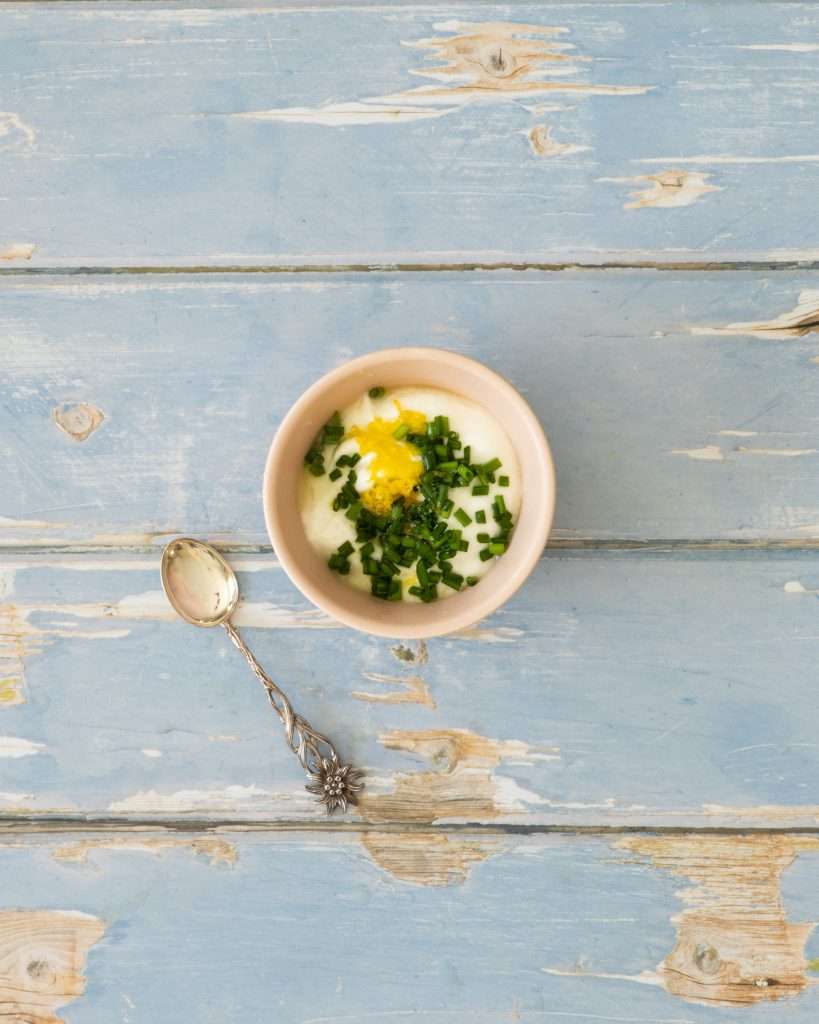
Lemon Herb Yogurt (Quick)
- ½ cup Greek yogurt
- Zest of ½ lemon
- 1–2 tsp lemon juice
- 1 tbsp chopped chives or dill
- Pinch of salt
Stir everything together and adjust to taste. It should be fresh and slightly tangy.
Poached Egg (Simple Method)
Bring a small pot of water to a gentle simmer and add a splash of vinegar.
Crack the egg into a small bowl, then gently slide it into the water. Cook for about 3 minutes, until the whites are set and the yolk is still soft.
Lift out with a slotted spoon and place directly over the rösti.
Variations & Substitutions
No carrot?
You can skip it and make a simple herb rösti instead, though you’ll lose that subtle sweetness and spring feel.
Try a different vegetable
Finely grated zucchini can work, but must be squeezed very well to remove moisture. Keep the ratio low so the rösti still crisps.
Switch the herbs
Dill or chervil can be used in place of parsley for a slightly different spring flavor.
Make it dairy-free
Use only oil instead of butter to make this carrot rosti recipe dairy-free. You’ll still get a crisp result, just with a slightly lighter flavor.
Add a touch of cheese
A small amount of finely grated Gruyère or Parmesan can be mixed in for extra depth – but keep it minimal so it doesn’t become heavy.
Make mini rösti
Instead of one large rösti, I like to form small patties – this carrot rosti recipe is perfect for brunch spreads or entertaining.
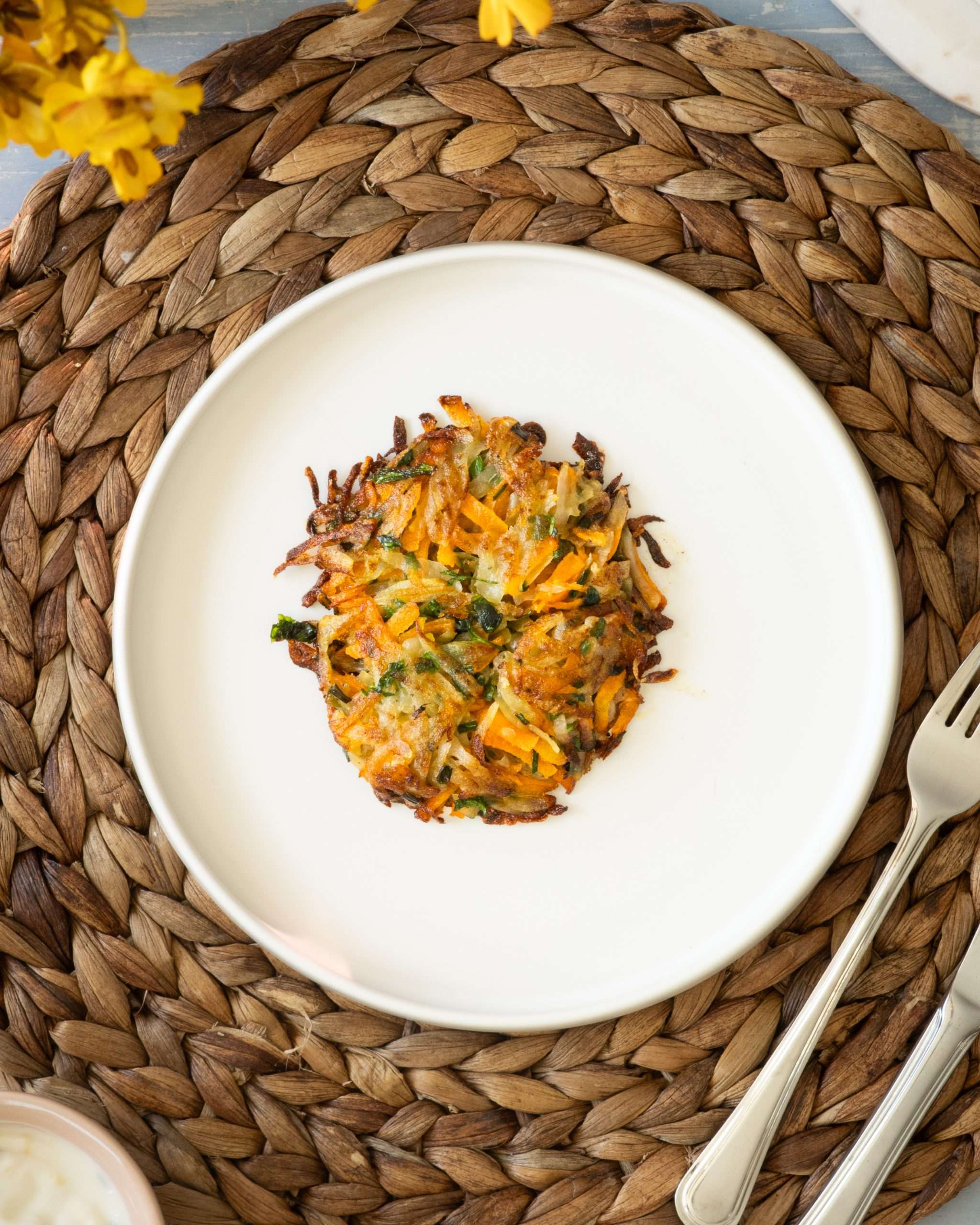
Carrot Rösti (Crispy Swiss Spring Version)
Equipment
Ingredients
Method
- Parboil the potatoes
- Place whole potatoes in salted water and simmer for 10–12 minutes, until just tender on the outside. Drain and let cool completely.
- Grate the potatoes and carrot
- Grate the cooled potatoes using a coarse grater. Grate the carrot and lightly squeeze out excess moisture using a clean towel.
- Mix gently
- In a bowl, combine potatoes, carrot, chives, parsley, lemon zest, salt, and optional nutmeg. Toss lightly—do not overmix.
- Cook the rösti
- Heat butter and oil in a pan over medium heat. Add the mixture and press into a thin, even layer (about 1–2 cm thick).
- Cook until crisp
- Let cook undisturbed for 8–10 minutes until golden underneath. Flip and cook the other side until equally crisp.
- Serve immediately
- Slide onto a plate and serve warm.
- In a small bowl, mix yogurt, lemon zest, lemon juice, herbs, and salt. Adjust to taste.
- Bring a pot of water to a gentle simmer and add vinegar. Crack eggs into a bowl and gently slide into the water. Cook for about 3 minutes, then remove with a slotted spoon.
- Top the rösti with a poached egg and a spoonful of lemon herb yogurt. Finish with extra herbs if desired.
Notes
- Parboiling is key for the classic rösti texture
- Squeeze excess moisture from the carrot to ensure crispness
- Cook undisturbed for the best golden crust
- Keep the rösti relatively thin for even cooking
Disclaimer: I am not a certified nutritionist. Nutrition facts are calculated using an automated database of common ingredients and are intended as an estimate only. Variations can occur depending on product brands, measuring methods, and ingredient swaps.
Did you make this recipe?
I'd love to know how it turned out!
Serving Ideas
This carrot rösti recipe is wonderfully versatile – equally at home on an Easter table or as a simple spring meal. Here are a few ways to serve it:
- With a soft poached egg
The yolk adds richness and pairs beautifully with the lemon and herbs. - With lemon herb yogurt
A cool, tangy spoonful on top brings everything together and enhances the fresh flavors. - Alongside sautéed asparagus or peas
Light spring vegetables complement the sweetness of the carrot and keep the dish seasonal. - With smoked salmon and dill
For a more elevated brunch, add a few slices of smoked salmon and a touch of dill. - With goat cheese or shaved Gruyère
A small amount adds creaminess without making the dish feel heavy. - As a side to a classic Swiss dish
Traditionally, rösti is served with dishes like Zürcher Geschnetzeltes for a more complete meal.
Make it Perfect
- Start with parboiled potatoes
This is what gives you that classic rösti texture – crispy on the outside, tender inside. Skipping this step will change the result completely. - Remove excess moisture from the carrot
A quick squeeze in a clean towel is enough. Too much moisture will steam the rösti instead of letting it crisp. - Keep the mixture loose
Toss everything gently with your fingers. Pressing or overmixing will make the rösti dense instead of light and crisp. - Use enough fat in the pan
A combination of butter and oil gives you both flavor and a proper golden crust. - Cook it low and steady
Medium heat is key for this carrot rosti recipe. Too hot and it burns before cooking through; too low and it won’t crisp. - Don’t rush the crust
Let it cook undisturbed for a full 8–10 minutes before flipping. This is where the magic happens. - Go thinner, not thicker
A thinner rösti (about 1–2 cm) will crisp more evenly and feel lighter – perfect for a spring version.
Storage & Make-Ahead
Storing leftovers
Rösti is best enjoyed fresh, but leftovers can still be delicious.
- Store in an airtight container in the fridge for up to 2–3 days
- Reheat in a pan over medium heat to bring back some crispness
- Avoid the microwave if possible – it softens the texture
Reheating tip
For the best result, reheat slices in a lightly oiled pan until warmed through and crisp again on both sides.
Make ahead
You can prep parts of this carrot rosti recipe in advance to make things easier:
- Parboil the potatoes ahead of time
Let them cool, then store covered in the fridge for up to 24 hours before grating - Grate the potatoes just before cooking
This keeps them from oxidizing and turning grey - Prep the carrot and herbs in advance
Store separately in the fridge, ready to mix in
Can you freeze rösti?
It’s not ideal. The texture tends to change once thawed, and you lose that crisp edge that makes rösti so good.
Frequently Asked Questions
Watch the Video
This is one of those small changes that feels just right this time of year – still rooted in tradition, still comforting, but with a little more lightness and a quiet nod to the season.
If you enjoy recipes like this, I share more seasonal Swiss-inspired dishes and kitchen notes through my newsletter (sign up below), always from my table to yours.
NEWSLETTER SIGN-UP
Hungry for More Swiss Recipes?
If you’re curious about Swiss food beyond fondue and chocolate, you’re in the right place.
Subscribe to my newsletter and I’ll send you seasonal recipes, Swiss kitchen favorites, and the occasional family story straight from my Swiss-Canadian kitchen.


